
Gifts by Recipient
How to Choose a Thoughtful Gift for a Wife Who Has Everything
Sep
A practical, low-pressure guide to choosing a gift that reflects who she is now-not simply adding another object to her life.
1. The Short Answer
When your wife seems to have everything, stop asking what she does not own. Ask what would make her feel accurately seen, genuinely supported, pleasantly surprised, or more connected to you. The strongest gift may be an upgraded daily ritual, a fully planned experience, a preserved memory, time returned to her, or one carefully chosen object that fits her real taste.
Begin with evidence from her current life. Notice what she uses, saves, mentions, replaces, avoids, and wishes were easier. Decide what you want the gift to communicate. Then choose a format that respects her preferences, time, space, privacy, and freedom to say yes or no. A thoughtful gift is not a test of how well you know your wife; it is a considerate response to what you have learned.
Read more: How to Choose a Meaningful Gift for Anyone
2. Why She Has Everything Changes the Question
She has everything often means she can buy ordinary things for herself, has limited room for more possessions, has refined tastes, or values choice more than surprise. It may also mean the usual categories-jewelry, perfume, bags, flowers, spa products-feel too broad to guide a confident decision.
This does not make her impossible to shop for. It means ownership is a weak signal. Relevance becomes more important than novelty, and the way you plan, present, and explain the gift matters more. Instead of searching for a universally impressive product, look for a specific improvement, memory, experience, or message that belongs in her life.
3. Start With Her Present Life
Use what your wife is showing you now, not a version of her from several years ago. Interests change. Routines change. A gift connected to an old hobby may feel nostalgic, or it may create pressure to become that person again.
For a week or two, pay attention without turning normal conversation into an interview. Useful clues include:
- Items she uses repeatedly and has never upgraded.
- Small inconveniences she solves every day.
- Activities she keeps saying she wants to try or return to.
- Restaurants, artists, places, books, colors, textures, or styles she saves.
- Things she admires but decides are unnecessary for herself.
- Responsibilities that consume time she would rather spend elsewhere.
- What she does not want: clutter, public attention, fixed plans, complicated care, or another decision to manage.
Listen for repeated patterns rather than one casual comment. One mention may be curiosity; several mentions often indicate a real preference. If the choice depends on fit, scent, shade, schedule, or permanent customization, discreet confirmation is wiser than a risky surprise.
4. Decide What You Want the Gift to Say
A clear message prevents random shopping. Choose one primary meaning before choosing the format:
| Message | Best direction | Question to ask |
| I notice you | A precise upgrade or preference-led gift | What detail would prove I paid attention? |
| I appreciate you | A letter, tribute, or relief from an ongoing task | What contribution deserves recognition? |
| I remember us | A photo story, map, recreated date, or memory experience | Which shared moment still matters to both of us? |
| I support you | Time, tools, lessons, or practical help for a goal she chose | How can I help without turning support into pressure? |
| I want time with you | A fully planned but flexible experience | What would she enjoy without having to organize it? |
Do not make the gift carry every message at once. One accurate idea, expressed clearly, is stronger than an overloaded package of unrelated items.
5. Use a Five-Part Thoughtfulness Test
Before buying, score the idea against five practical standards. It does not need to be perfect, but a weak answer in several areas is a sign to reconsider.
- Recognition: Does it reflect something true and current about her?
- Relevance: Will it fit her routine, interests, home, style, or present season of life?
- Ease: Can she enjoy it without arranging, storing, maintaining, or paying for extra parts?
- Autonomy: Can she change the date, size, color, guest, or format if needed?
- Emotional fit: Is the message warm and appropriate without demanding a public reaction?
A gift can be romantic without being dramatic. It can be practical without feeling impersonal. The deciding factor is whether the usefulness or emotion was chosen with her in mind.
6. Seven Gift Directions That Work Well
6.1 Upgrade a Daily Ritual
Choose something connected to a routine she already enjoys: reading, coffee, skin care, gardening, cooking, travel, exercise, music, or quiet time. Upgrade quality, comfort, or convenience rather than introducing a new obligation. Confirm technical details such as size, compatibility, ingredients, care, or storage.
6.2 Plan an Experience and Remove the Work
An experience feels generous only when the planning burden does not quietly move to her. Arrange the reservations, transportation, childcare, timing, accessibility, and cancellation options. Keep the plan flexible enough for her energy and schedule. The gift is not merely the ticket; it is the ease around it.
6.3 Preserve One Shared Memory
Create a concise photo book, frame one meaningful image, commission a restrained illustration, recreate a favorite date, or collect a few written memories. Edit carefully. A focused story usually feels more intentional than a large archive. Use memories she would also consider positive and private enough to display.
6.4 Support a Goal She Chose
A class, useful tool, quiet workspace improvement, or protected time can support a goal she has already expressed. Avoid gifts that imply she should change her body, appearance, home, productivity, or career. Support should reduce friction, not assign self-improvement homework.
6.5 Give Back Time
A service can be meaningful when it removes work she genuinely wants removed. Consider meal preparation, cleaning, organizing, repairs, pet care, or childcare only when you know she welcomes that service and trusts the provider. Shared household duties are not automatically gifts; the thoughtful element is arranging additional relief or taking full ownership of a burden beyond your normal responsibilities.
6.6 Choose a Flexible Indulgence
When taste is highly specific, offer a curated choice instead of guessing. Present two or three well-researched options, a returnable selection, or a generous plan to choose together. Flexibility does not make the gift less thoughtful when the research and invitation are personal.
6.7 Write Something Only You Can Give
A short, specific letter can carry more meaning than extra products. Name a quality you admire, a recent moment you appreciated, and what you hope to share next. Avoid generic praise and do not turn the message into a record of your effort. The goal is to help her feel recognized.

7. Match the Gift to the Occasion
The same idea can feel different depending on why you are giving it. An anniversary can center your shared story. A birthday should center her as an individual. A holiday may favor warmth, tradition, and relaxed enjoyment. An everyday gift can be smaller and more spontaneous because it is not carrying the weight of a major milestone.
For a significant anniversary or life transition, acknowledge the moment directly. For a difficult season, avoid forcing celebration or optimism. Offer comfort, practical support, and choice. When there is no formal occasion, explain the small observation that prompted the gift; that context often becomes the most memorable part.
Read more: Gift Ideas for Every Occasion: A Year-Round Guide
8. Set a Budget Without Using Price as Proof
Choose an amount you can spend comfortably, including tax, shipping, booking fees, childcare, travel, and presentation. A gift that creates financial stress can change the emotional meaning for both of you. Spend more only when the added cost improves quality, durability, comfort, access, or the experience.
At a modest budget, focus on specificity: a favorite treat, a planned morning, a printed photograph, a book with a precise note, or time reserved for something she enjoys. At a higher budget, protect flexibility and avoid conspicuous luxury that does not match her values.
Read more: Meaningful Gifts by Budget: Thoughtful Ideas From $10 to $100
9. Personalize With Restraint
Personalization can be visible-a name, date, or photograph-or quiet: her preferred color, material, pace, music, menu, or level of privacy. Quiet personalization is often safer for someone with refined taste.
Verify spelling, dates, image quality, dimensions, initials, and production time before ordering. Do not expose an address, private joke, family detail, health experience, or sensitive memory. If you are uncertain, place the personal message in a removable card and keep the gift itself adaptable.
Read more: The Complete Guide to Personalized Gifts That Feel Thoughtful
10. What to Avoid
- A gift that primarily reflects your taste or hobby.
- Household equipment presented as her personal gift unless she specifically requested it.
- Appearance, weight, fitness, anti-aging, or self-improvement gifts she did not ask for.
- A surprise trip or event that requires her to solve scheduling, childcare, packing, or hidden costs.
- Permanent personalization based on uncertain spelling, sizing, dates, or style.
- More decorative objects when she has expressed a desire for less clutter.
- A public proposal, performance, reveal, or social-media moment when she prefers privacy.
- An expensive gift used to repair conflict, replace an apology, or create obligation.
Be especially careful with gifts that carry an implied message. A cooking appliance can say I noticed what you wanted, or it can say please do more cooking. Context, prior requests, household roles, and presentation determine the difference.
11. A Better Last-Minute Gift
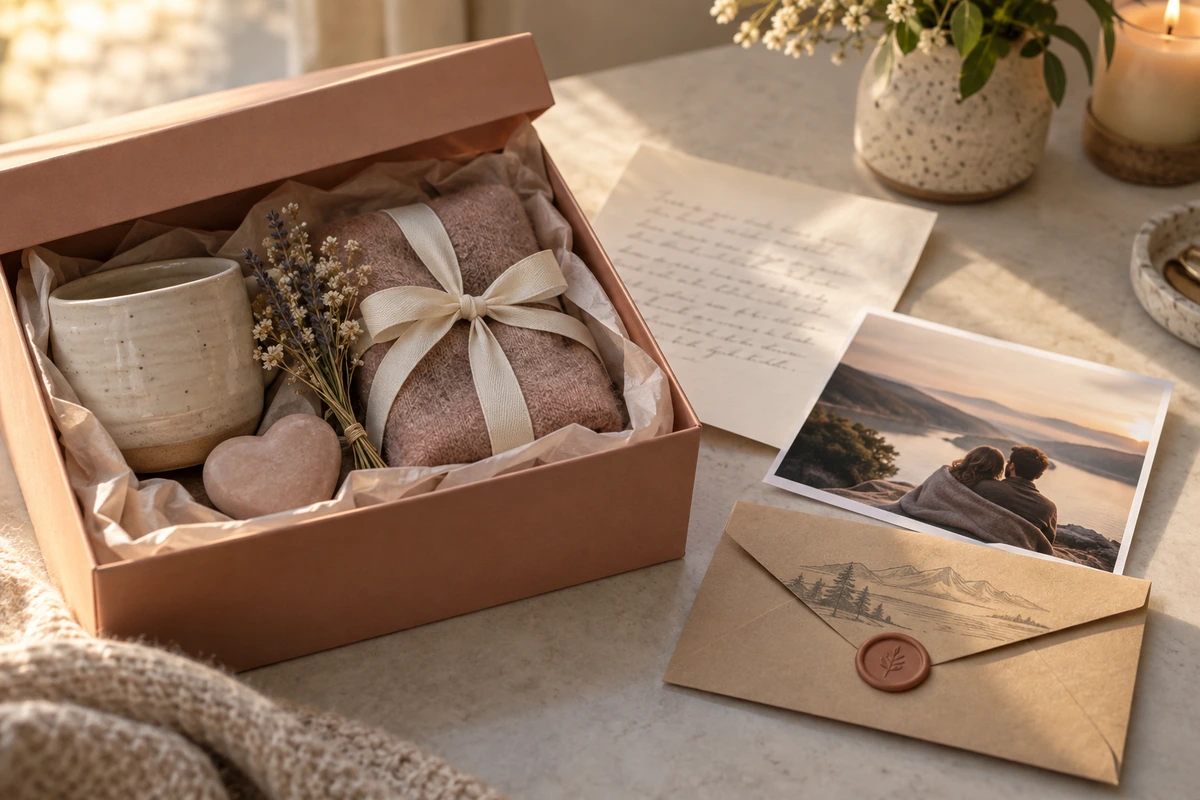
When time is short, do not buy random filler to make the package look larger. Choose a simple present available now and pair it with a specific plan. Write what you noticed, what you chose, and what happens next. For example, give her favorite breakfast with a card confirming a day you have reserved and organized around an activity she enjoys.
If the main gift will arrive later, provide a photograph or brief description only when it preserves the pleasure of anticipation. State the delivery timing honestly. A modest gift on time is better than an elaborate promise you have not arranged.
12. The Seven-Question Final Check
- What specific, current fact about my wife led me to this idea?
- What do I want the gift to communicate?
- Will she enjoy it, or will she have to manage it?
- Does it fit her taste, space, schedule, comfort, and privacy?
- Can she exchange, reschedule, resize, or adapt it without guilt?
- Have I checked every practical detail and hidden cost?
- Can I explain why I chose it in two sincere sentences?
If your answers rely on several guesses, reduce the risk. Ask a discreet question, offer a choice, choose an experience with flexible dates, or let the message carry the surprise while she helps select the final form.
13. Frequently Asked Questions
13.1 What is the best gift for a wife who says she wants nothing?
Respect the statement before trying to overcome it. She may prefer time together, relief from a task, a handwritten message, a favorite meal, a charitable contribution, or no physical gift. Ask whether she means no possessions, no expensive gift, or no celebration at all.
13.2 Are experience gifts better than physical gifts?
Neither format is automatically better. Experiences suit someone who values time, novelty, or less clutter. Physical gifts work well when they improve a real routine, preserve a memory, or match a specific preference. Choose the format that creates the least friction for her.
13.3 Is it okay to ask my wife what she wants?
Yes. Asking can show respect, especially for expensive, fitted, scented, scheduled, or permanent gifts. Preserve thoughtfulness by asking focused questions, researching the options, and adding one personal element she did not have to plan.
13.4 How can I make a practical gift feel romantic?
Connect the practical benefit to something you notice and appreciate about her life. Choose a high-quality version she would enjoy, present it beautifully, and include a specific message. Do not label ordinary shared household responsibilities as a romantic gift.
13.5 What if my wife has very specific taste?
Use her existing choices as references, buy from a seller with a clear return policy, or invite her to choose from a short list you researched. The surprise can be the occasion, budget, presentation, or time you planned together-not necessarily the exact item.
13.6 How many gifts should I give?
One coherent gift is usually enough. If you give several items, use one theme and make each item useful. Avoid adding filler simply to increase the number of packages.
14. Final Thought
A wife who has everything does not need you to discover an object no one else has found. She needs a choice that reflects careful attention to who she is now. Notice one true detail, decide what you want to communicate, remove avoidable work, and leave room for her preferences. The most thoughtful gift is often the one that makes her life feel understood rather than filled.
