
Gifts by Occasion
Gift Ideas for Every Occasion: A Year Round Guide
Sep
A practical guide to choosing thoughtful gifts for birthdays, weddings, holidays, milestones, difficult moments, and the occasions that do not fit neatly on a calendar.
The Short Answer
The right gift depends less on the occasion label and more on what the moment means to the recipient. A birthday may call for celebration, a graduation for confidence, a wedding for support, and a difficult season for quiet care. Start with the relationship, the meaning of the occasion, and the feeling you want the gift to create. Then choose something useful, personal, experiential, or symbolic that fits those three factors.
This year-round guide will help you make that decision without relying on a generic list of products. Use it as a framework whenever a date appears on your calendar-or whenever someone in your life deserves to feel remembered.
A Simple Framework for Choosing Any Gift
Before looking for ideas, answer four questions. They will usually narrow the field faster than browsing dozens of gift lists.
- Who is the recipient to you? A thoughtful gift for a partner communicates something different from a gift for a coworker, teacher, neighbor, or new friend.
- What does this occasion mean to them? The same milestone can feel joyful, stressful, bittersweet, formal, or deeply personal.
- What do you want the gift to say? Common messages include I know you, I am proud of you, I appreciate you, I am here, and Let us celebrate.
- What will fit their real life? Consider their space, routines, preferences, responsibilities, and comfort with receiving gifts.
When an idea answers all four questions, it is more likely to feel thoughtful- even if it is simple or inexpensive.
Birthday Gifts That Feel Personal
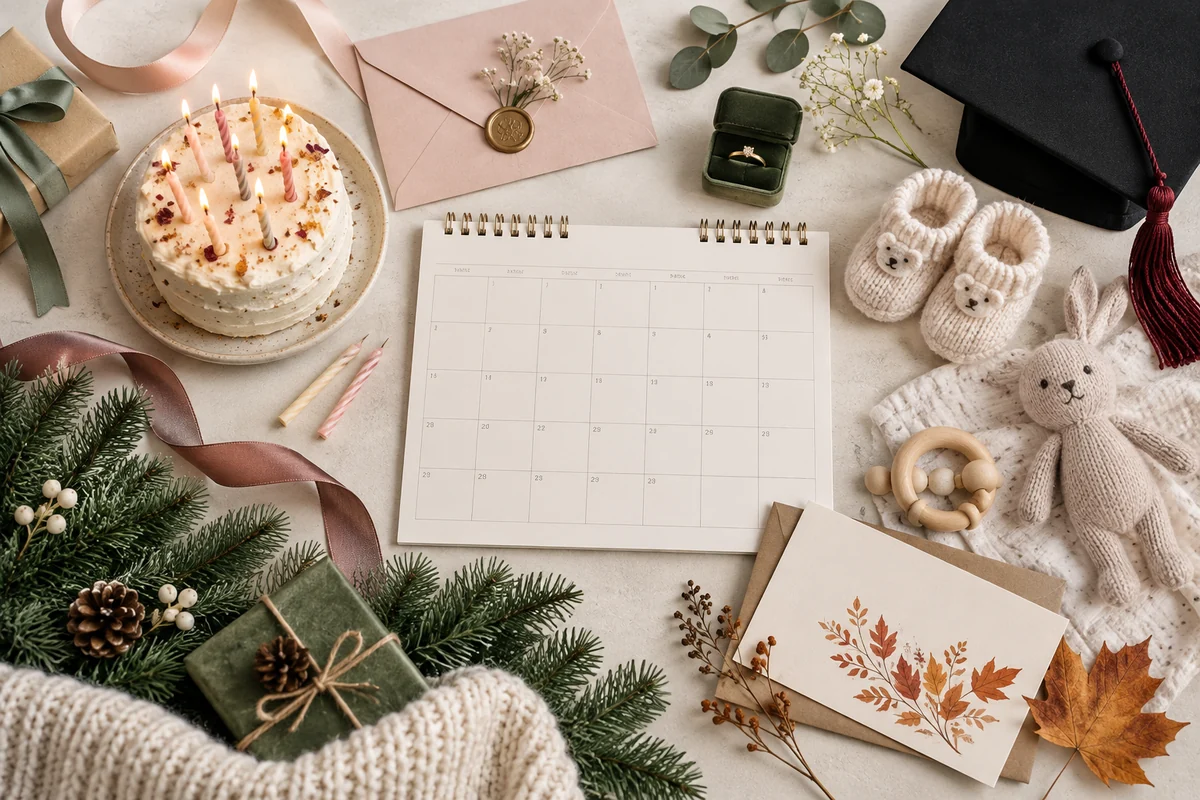
Birthdays are about the person more than the date. Instead of beginning with age or gender, think about what has changed in the recipient’s life during the past year. A gift can celebrate a new interest, make a routine easier, preserve a memory, or give them permission to enjoy something they rarely choose for themselves.
For someone you know well, use a detail they have mentioned in ordinary conversation: a book they wanted to read, a place they hope to visit, a hobby they are returning to, or a small inconvenience they face repeatedly. For a newer relationship, choose something warm but not overly intimate, such as a shared experience, a carefully selected treat, or an item connected to a known interest.
Avoid turning a milestone birthday into a joke unless you are certain the recipient will enjoy it. Humor should strengthen the relationship, not make age, appearance, or life circumstances the center of attention.
Anniversary and Romantic Occasion Gifts
Anniversary gifts work best when they reflect the life two people have built together. The most meaningful direction is often not more romantic, but more specific. A recreated first date, a printed memory from an important trip, a planned day without responsibilities, or a letter about the past year can carry more emotional weight than an expensive object with no personal context.
For Valentine’s Day or a newer relationship, match the intensity of the gift to the stage of the relationship. A grand gesture given too early can create pressure. A small gift that shows attention-paired with time and a sincere note-often feels more natural.
Ask what would make the recipient feel loved rather than what looks impressive. Some people value sentimental keepsakes; others would rather receive help, an experience, uninterrupted time, or something useful they would not buy for themselves.
Wedding and Engagement Gifts
Wedding gifts should support the couple’s shared life while respecting their preferences. A registry is not impersonal; it is information the couple has intentionally provided. Choosing from it can be one of the most considerate decisions, especially when the couple is combining homes or has limited space.
If you go beyond the registry, connect the gift to the couple rather than to assumptions about marriage. Consider an experience they can enjoy together, a contribution toward a shared goal, a high-quality version of something they use often, or a keepsake tied to their story. Personalization is most effective when it is subtle and accurate. Always verify names, dates, and spellings before ordering.
When cultural expectations, cash gifts, or family traditions are involved, follow the couple’s guidance or ask someone close to them. Thoughtfulness includes respecting the customs surrounding the occasion.
New Baby and New Parent Gifts
A baby gift celebrates a new life, but the household is also adjusting to exhaustion, new routines, and an enormous emotional transition. Useful gifts are often appreciated, but usefulness should be defined by the parents-not by what the giver assumes they need.
A registry is the safest starting point. If you want to add something personal, include a book with a short note, a keepsake that does not create storage pressure, or support for the parents such as a meal, delivery credit, or practical help offered without expectation. Ask before choosing clothing in newborn sizes; babies grow quickly, seasons matter, and families often receive more tiny outfits than they can use.
Do not overlook the parent who gave birth or the partner supporting the transition. A gift that recognizes their wellbeing can feel especially caring.
Graduation Gifts for the Next Chapter
Graduation is both an achievement and a transition. The best gifts recognize the work already completed while helping the graduate move forward. Think about the next environment: college, a first job, vocational training, travel, a new city, or a period of uncertainty.
A useful tool, financial contribution, professional resource, experience, or letter of encouragement can all be appropriate. If the graduate is unsure about what comes next, avoid gifts that imply there is only one correct path. Your message should communicate confidence in the person, not pressure about the timeline.
For younger graduates, a small symbolic item paired with practical support can strike the right balance. For college or professional graduates, consider what will reduce friction in their new daily life.
Housewarming and New Home Gifts
A housewarming gift should make a new space feel more comfortable without imposing your taste. Consumables, useful household basics, local specialties, and flexible gifts are safer than large décor pieces. If you know the recipient’s style well, a small object with a clear connection to them can work beautifully.
Consider the move itself. Someone who has just unpacked may appreciate dinner, help, a home-store credit, a low-maintenance plant, or a practical item they have not had time to replace. Renters and people living in small spaces may prefer gifts that are portable, compact, or consumable.
Thank You and Appreciation Gifts
A thank-you gift should focus on the contribution, not the price. Name what the person did and how it affected you. A specific message often carries more meaning than the object accompanying it.
For teachers, caregivers, mentors, hosts, and service professionals, check relevant workplace policies before choosing cash, gift cards, alcohol, or high-value items. A handwritten note, contribution from a group, useful consumable, or modest gift connected to the person’s interests can express appreciation without creating discomfort.
Workplace Gifts for Coworkers and Bosses
Professional gifts require careful boundaries. Keep the tone appropriate to the relationship and workplace culture. Group gifts are often better for a manager because they reduce pressure on individual employees. Gifts between coworkers can be light, useful, and connected to shared experiences without becoming overly personal.
Avoid intimate items, political or religious messages, expensive gifts, appearance-related products, and anything that might feel like an obligation. For a departing coworker, memories and specific appreciation usually matter more than novelty merchandise.
Gifts for Difficult Times
Illness, grief, job loss, caregiving, divorce, and other difficult transitions are not occasions to fix someone’s feelings. The purpose of a gift is to offer presence, comfort, or practical relief. Choose something that requires little effort from the recipient and does not demand a response.
Food, household support, a simple comfort item, a contribution to a meaningful cause, or a note with a specific offer of help may be appropriate. Avoid forced positivity, unsolicited advice, or sentimental objects that assume how the recipient should process the experience. If you are unsure, a sincere message such as I am thinking of you; no reply needed can be enough.
Religious and Cultural Celebrations
For religious or cultural occasions, learn before you choose. Traditions can vary between communities, families, and individuals. A respectful gift acknowledges the celebration without reducing it to decoration or borrowing sacred symbols casually.
If you are not familiar with the occasion, ask what is appropriate or select a neutral gesture such as food that meets dietary requirements, flowers when customary, a host gift, or a contribution requested by the family. Check calendars and delivery times carefully because some observances begin at sunset or follow dates that change each year.
Holiday Gifts Without the Holiday Stress
Major holidays can turn gift giving into a long list of obligations. Reduce pressure by deciding in advance who you genuinely plan to buy for, what budget you can sustain, and whether your family or group would prefer exchanges, shared experiences, charitable giving, or gifts only for children.
For Christmas, Hanukkah, and other year-end celebrations, avoid assuming that everyone observes the same traditions. Let the recipient’s practices guide your choice. For Mother’s Day and Father’s Day, remember that these dates can be complicated for people experiencing grief, infertility, estrangement, or changing family roles. A private, gentle gesture may be more appropriate than a public celebration.
Seasonal gifts become more meaningful when they reflect the person rather than the holiday aisle. Begin with the recipient’s winter routines, favorite traditions, plans, and needs, then choose accordingly.
Personalizing a Gift Without Making It Generic

Personalization is not limited to printing a name on an object. A gift feels personal when it contains evidence of attention. That evidence may be a remembered preference, a shared story, the timing of the gesture, or an explanation of why you chose it.
Use one or more of these approaches:
- Connect the gift to a specific memory or conversation.
- Adapt the presentation to the recipient’s style rather than your own.
- Add a short note explaining what made you think of them.
- Choose an experience that suits their energy level, schedule, and comfort.
- Remove work from the gift: assemble it, include needed accessories, or make redemption simple.
A useful test is whether the same gift, unchanged, could be given to almost anyone. If so, the accompanying choice, message, or experience may need one more personal detail.
How Much Should You Spend
There is no universal amount that proves you care. A good budget is one you can afford comfortably and that fits the norms of the relationship and occasion. Spending too much can make the recipient feel indebted, especially in new relationships, professional settings, or situations where they cannot reciprocate.
When the budget is limited, focus on specificity and presentation. A modest gift connected to a real interest often feels more thoughtful than an expensive generic option. Time, practical help, a shared experience, a carefully written note, or something made well can also carry value without relying on price.
For weddings, group gifts, and formal events, regional or family expectations may help guide the range, but your financial wellbeing still matters. Give within your means and avoid treating etiquette advice as a compulsory invoice.
Thoughtful Last Minute Gifts
Last-minute does not have to mean careless. When time is short, simplify the object and strengthen the intention. Choose a local experience, favorite food, book available nearby, digital membership, contribution toward a goal, or plan for time together. Then add a message that explains why it suits the person.
Do not disguise a delayed personalized gift with a random substitute. If the right gift will arrive later, tell the recipient. A printed image, small symbolic placeholder, or handwritten note describing what is coming can make the timing feel intentional.
Common Gift Giving Mistakes:
- Choosing for the version of the person you wish they would become.
- Using a gift to deliver criticism about health, appearance, habits, relationships, or career.
- Buying something large without considering storage, maintenance, allergies, pets, or household rules.
- Assuming expensive means meaningful.
- Giving an experience that creates hidden costs, travel, childcare, or scheduling work.
- Making the recipient perform gratitude publicly.
- Ignoring return options when size, fit, taste, or compatibility is uncertain.
A thoughtful gift should make the recipient feel seen-not managed, tested, or obligated.
Build a Year Round Gift Plan
A little preparation improves both thoughtfulness and timing. Keep a private list of important dates, interests people mention, favorite places, sizes only when voluntarily shared and genuinely useful, and ideas that arise during ordinary conversations. Do not collect unnecessary personal information; the purpose is simply to remember what people have chosen to tell you.
Review upcoming occasions once a month. For personalized, handmade, or international gifts, begin earlier. For seasonal articles and shopping periods, remember that shipping windows and availability can change. A simple calendar prevents rushed decisions and gives you time to choose with care.
Frequently Asked Questions
What is an appropriate gift when I do not know someone well
Choose something modest, flexible, and connected to the occasion rather than to personal assumptions. Consumables, a host gift, a local specialty, or a broadly useful item are usually safer than fragrance, clothing, décor, or highly sentimental gifts.
Is a gift card an impersonal gift
Not necessarily. A gift card can be thoughtful when the store, service, or experience clearly fits the recipient. Add a note explaining the choice. It becomes impersonal mainly when it transfers all the decision-making to the recipient without showing any awareness of what they enjoy.
What should I give someone who says they do not want anything
Respect the request. Consider time together, a favorite consumable, practical help, a charitable contribution they would welcome, or a sincere note. Do not use the occasion to overwhelm them with a large object they have already said they do not need.
How can I make an inexpensive gift feel meaningful
Choose one precise connection to the recipient and explain it. Thoughtful presentation, a handwritten message, a shared memory, or completing a small task for them can add meaning without increasing the price.
Should every occasion include a gift
No. Presence, acknowledgment, help, or a message may be more appropriate. Gifts are one form of care, not a requirement for every relationship or event.
Final Thought
The best year-round gift strategy is not to keep a perfect list of things to buy. It is to pay attention. Notice what matters to people, what season of life they are in, what would make their day easier, and what message the moment calls for. When your gift reflects that understanding, even a simple gesture can feel exactly right.

Pingback: How to Choose a Meaningful Gift for Anyone - Meaningful Gifts & Ideas