
Gifts by Budget & Meaning
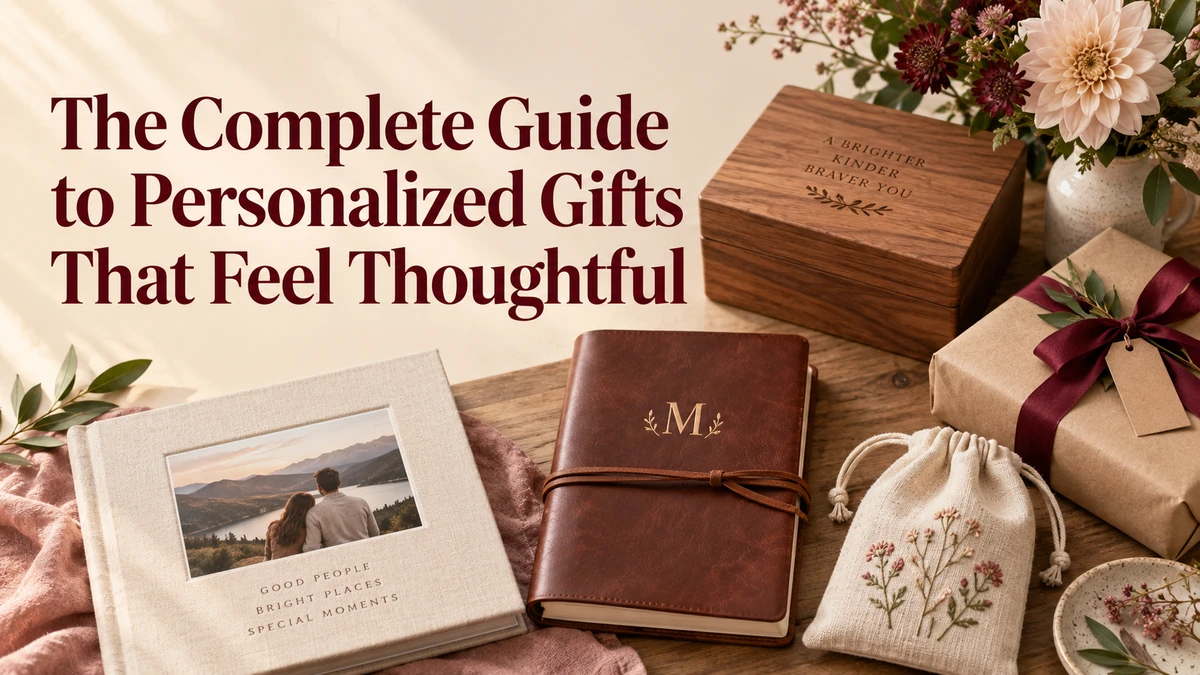
The Complete Guide to Personalized Gifts That Feel Thoughtful
Sep
How to choose the right detail, message, format, and level of personalization-without making the gift feel generic, intrusive, or impossible to use.
1. The Short Answer
A personalized gift feels thoughtful when the personalization reveals something accurate and welcome about the recipient. A name, date, photograph, location, phrase, color, or design matters only when it connects to a real preference, memory, relationship, or life moment.
Start with the person and the message, then choose an object or experience that carries that meaning. Verify every detail before ordering, consider privacy and emotional boundaries, and avoid permanent customization when you are uncertain about taste, size, spelling, or the relationship.
Read more: How to Choose a Meaningful Gift for Anyone
2. Personalized Does Not Automatically Mean Thoughtful
Personalization is a method, not proof of care. Adding initials to a generic product may make it unique, but it does not necessarily make it relevant. A thoughtful personalized gift answers a clear question: Why does this particular detail belong to this particular person?
The strongest personalized gifts usually combine three qualities:
- Recognition: the detail reflects something true about the recipient.
- Relevance: the gift fits their life, interests, or current moment.
- Restraint: the personalization respects their taste, privacy, and relationship with the giver.
A simple book with a specific inscription can be more personal than an expensive object covered in names and dates. The meaning should be easy for the recipient to understand without requiring a long explanation.
3. Begin With the Message
Before choosing a product, decide what you want the gift to communicate. This prevents you from selecting a customization option simply because it is available.
3.1 I Know You
Use a preference, routine, interest, place, or phrase the recipient has shared. This works well when the detail is stable and genuinely important to them.
3.2 I Remember This With You
Use a photograph, date, location, ticket, map, recipe, or brief line connected to a shared experience. Choose memories the recipient would also regard as positive and appropriate to preserve.
3.3 I Appreciate Who You Are
Highlight a quality, contribution, or role without reducing the recipient to a label. A message about their patience, humor, courage, or generosity often feels more human than a title such as “best mom” or “number one boss.”
3.4 I Support What Comes Next
For graduations, moves, new jobs, retirement, or other transitions, personalize around encouragement and possibility. Avoid predictions, advice, or expectations the recipient did not choose.
Read more: Gift Ideas for Every Occasion: A Year-Round Guide
4. Choose the Right Detail to Personalize
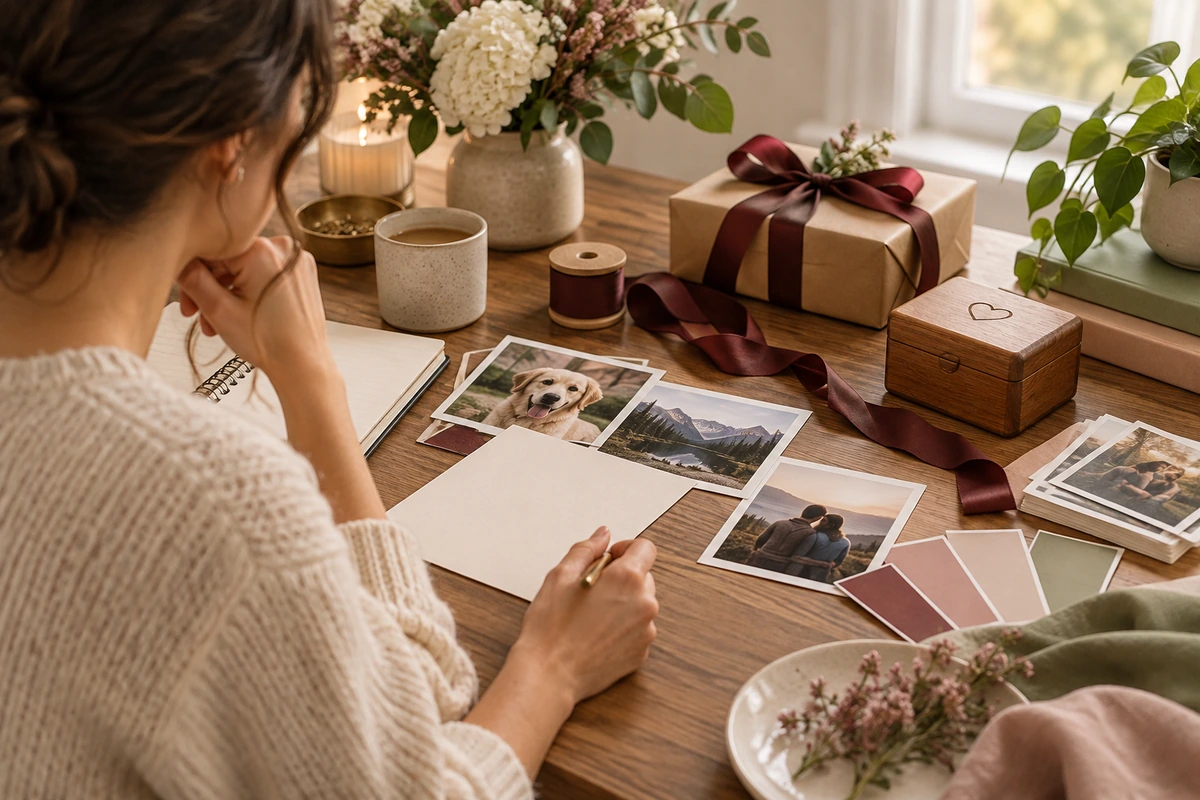
The detail is the emotional center of the gift. Choose information the recipient has shared openly and that you can verify. Never use sensitive information simply because you have access to it.
4.1 Names and Initials
Names and initials work well on frequently used objects when the recipient likes visible personalization. Confirm preferred name, spelling, capitalization, honorifics, and whether they use a middle or former name. Do not assume a legal name is the name they want displayed.
4.2 Dates
Dates can mark a wedding, birth, graduation, move, recovery, achievement, or first meeting. Verify the date independently if possible. Consider whether the recipient wants that date made public or permanently attached to an object.
4.3 Photographs
Choose a clear image with emotional value, flattering composition, and appropriate privacy. Ask permission when the photo involves children, a sensitive event, or someone who may not want their image printed. Preserve the original file and avoid screenshots when a higher-resolution version exists.
4.4 Places and Coordinates
A home, hometown, travel destination, venue, or meeting place can create a meaningful map or illustration. Exact coordinates may reveal private addresses, so a neighborhood, city, landmark, or general location is often safer.
4.5 Words and Phrases
A short quotation, family expression, recipe, inside joke, or line from a personal note can carry strong meaning. Avoid copyrighted lyrics or long passages when ordering commercial products. Make sure private jokes will still feel appropriate if the item is displayed publicly.
4.6 Colors Materials and Style
Personalization can be quiet. Choosing the recipient’s preferred color, fabric, paper, wood, typeface, or finish may feel more sophisticated than adding visible text. Look at what they already wear, carry, display, and use.
5. Match the Personalization to the Relationship
The closer the relationship, the more emotional specificity a gift can usually support. A partner or family member may welcome a private memory. A coworker, teacher, client, or newer friend generally needs a lighter and more neutral approach.
5.1 Partners and Spouses
Shared experiences, private messages, places, and relationship milestones can work well. Avoid turning the gift into a public test of affection or using it to compensate for an unresolved conflict.
5.2 Family Members
Family recipes, photographs, handwriting, stories, and traditions can preserve connection. Confirm facts with relatives and be sensitive to grief, estrangement, adoption, blended families, and other histories that may make a seemingly simple detail emotionally complex.
5.3 Friends
Use shared humor, interests, trips, routines, or meaningful support. Personalization should celebrate the friendship without implying a level of intimacy or obligation the recipient may not share.
5.4 Coworkers Teachers and Professional Relationships
Keep the gift modest, relevant, and suitable for the setting. A name on a useful item, a team message, or a specific thank-you may be appropriate. Avoid intimate photographs, personal jokes, expensive gifts, or anything that conflicts with workplace or institutional policy.
5.5 Someone You Do Not Know Well
Use low-risk personalization such as a preferred color, first initial, occasion, or broadly useful format. If you cannot confidently explain why the detail suits the person, a flexible non-custom gift may be the more thoughtful choice.
Read more: Gift Ideas by Recipient: Find the Right Gift for Every Relationship
6. Types of Personalized Gifts That Can Feel Meaningful
6.1 Photo and Memory Gifts
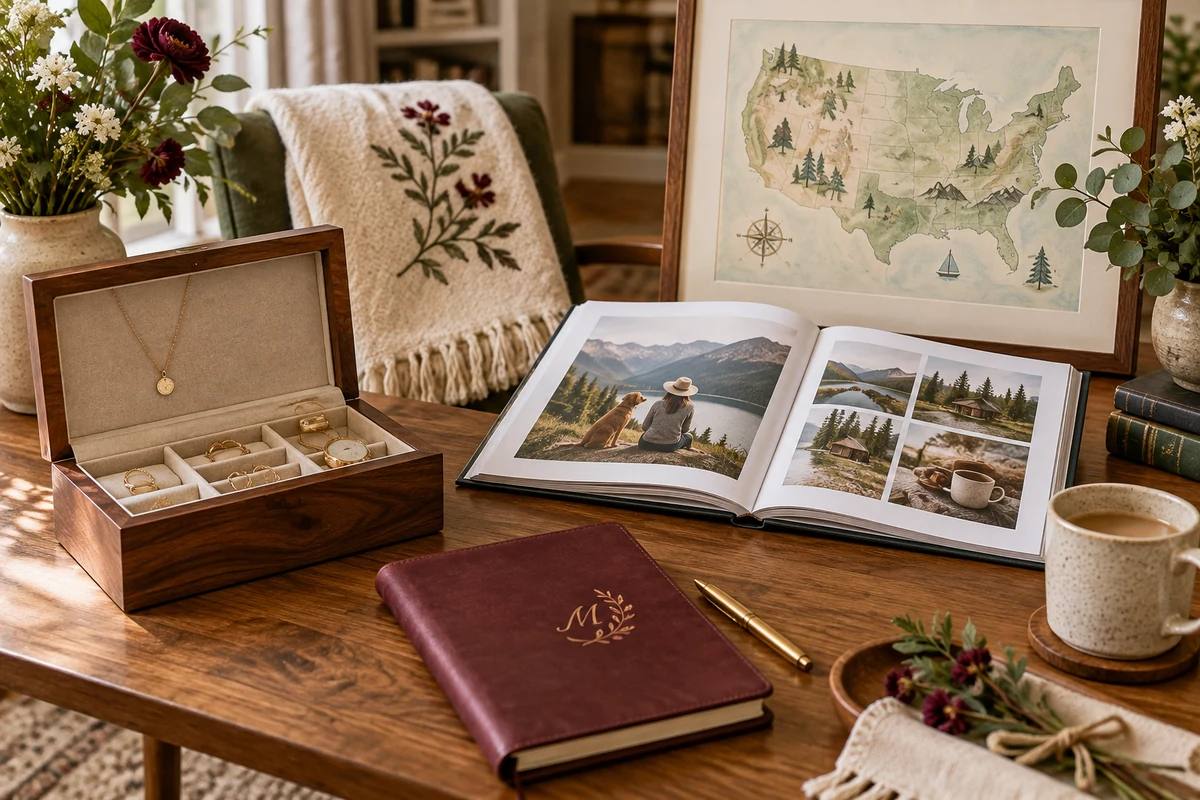
Photo books, framed images, memory boxes, calendars, and digitized family photographs are strongest when carefully edited. Select a coherent story rather than including every available image. Add dates or captions only when accurate.
6.2 Engraved or Embroidered Gifts
Jewelry, keepsake boxes, pens, tools, bags, blankets, and clothing can carry names, initials, dates, or short messages. Match the placement and visibility to the recipient’s style. Permanent engraving makes verification and quality control essential.
6.3 Custom Art and Maps
Portraits, home illustrations, star maps, sound-wave art, maps, and location prints can preserve a place or moment. Review the artist’s style carefully and confirm whether the recipient would want the subject displayed in their home.
6.4 Books Journals and Written Gifts
A selected book with a specific note, a journal with a discreet monogram, a family recipe collection, or a collection of letters can feel deeply personal. Handwritten content often carries more meaning than decorative customization.
6.5 Personalized Experiences
A planned day, private lesson, tasting, workshop, trip, or at-home experience can be personalized through the activity, timing, guests, food, music, and pace. Experiences need flexibility and should not create extra costs or scheduling work for the recipient.
6.6 Practical Personalized Gifts
A lunch bag, travel case, desk item, kitchen tool, or hobby accessory can combine recognition and daily usefulness. Confirm measurements, compatibility, care requirements, and whether visible initials are helpful or unwanted.
6.7 Handmade and Collaborative Gifts
A quilt, illustrated story, recorded messages, recipe book, or group photo project can carry many voices. Handmade effort is valuable only when the result fits the recipient; do not expect them to display or preserve an item indefinitely.
7. How to Personalize Without Overspending
Meaning does not require premium materials or elaborate production. A printed photograph, annotated map, selected recipe, short letter, custom playlist, or carefully presented memory can be effective at a modest cost. Spend first on accuracy, legibility, durable essentials, and safe materials.
When deciding whether to pay more, ask what the added cost improves. Better printing, stronger construction, responsible materials, or careful craftsmanship may be worth it. Extra decoration, oversized packaging, and unnecessary add-ons often contribute little.
Read more: Meaningful Gifts by Budget: Thoughtful Ideas From $10 to $100
8. Privacy and Emotional Boundaries
Personalized gifts can expose information that ordinary gifts do not. Before using a name, photograph, address, medical experience, memorial detail, religious phrase, family history, or private joke, consider who will see the gift and where it may be displayed.
- Use only information the recipient has willingly shared.
- Avoid exact addresses or identifying details on items used in public.
- Ask permission before using photographs of children or sensitive moments.
- Do not reveal pregnancy, engagement, health, identity, or other private news.
- Consider whether a memorial gift will comfort the recipient or surprise them during grief.
- Keep private messages on the inside, back, or removable card when appropriate.
A gift can be emotionally meaningful without being emotionally intense. When uncertain, choose a quieter detail and let the card carry the fuller message.
9. How to Check a Personalized Gift Before Ordering
Customized products are often final sale, so slow down before approving the design:
- Copy names and dates from a reliable source rather than typing from memory.
- Confirm preferred spelling, capitalization, initials, pronouns, titles, and family order.
- Check dimensions with a ruler; product mockups can make items look larger.
- Read the full material description, care instructions, production time, and return policy.
- Review every preview at full size and check line breaks, cropping, contrast, and alignment.
- Use high-resolution original images and inspect faces near folds, holes, or trim lines.
- Confirm delivery estimates include production time, not only shipping time.
- Save the order preview, wording, and confirmation until the gift arrives.
If an error would ruin the gift and you cannot verify the detail, choose removable personalization, a handwritten card, or a non-custom alternative.
10. How to Evaluate a Seller or Maker
Look beyond attractive product photos. Read recent reviews that mention engraving accuracy, print quality, color, packaging, communication, and delivery. Compare customer photographs with the listing images. Check whether the seller explains materials, proof approval, revision limits, and how errors are handled.
For handmade work, minor variation may be normal. For names, dates, measurements, and image placement, accuracy should be clear. If the deadline matters, contact the maker before ordering rather than relying on an optimistic estimate.
11. Present the Gift So the Meaning Is Clear
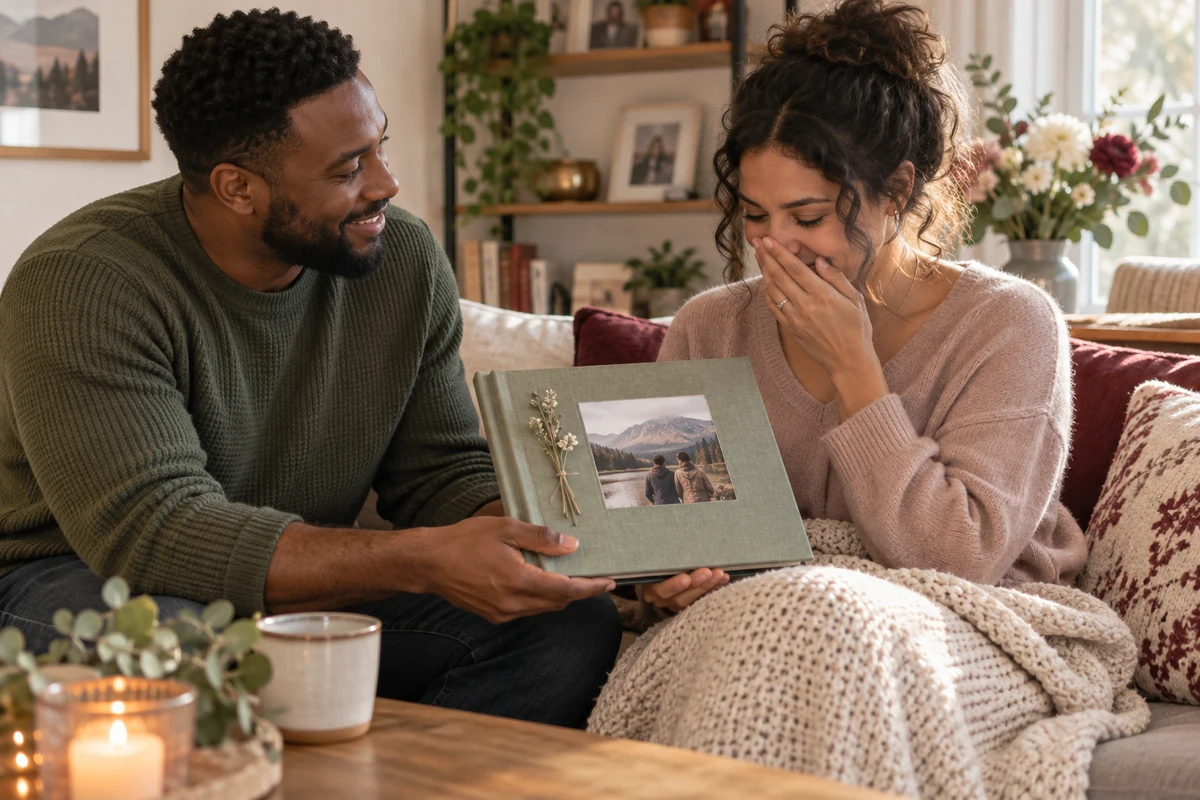
A brief message helps the recipient understand why you selected the detail. Use three parts: name the occasion, explain the connection, and offer a sincere wish.
For example: I chose this photograph because that weekend still reminds me how easily we laugh together. I hope this book gives you a place to keep many more good moments.
Give the gift without requiring an immediate emotional reaction, public opening, photograph, or social media post. A personal gift may take time to absorb. Include care instructions and quietly explain any exchange or correction option.
12. Common Personalized Gift Mistakes
- Choosing a product first and searching for a meaning afterward.
- Using a legal name instead of the name the recipient actually uses.
- Misspelling names, reversing dates, or ordering the wrong initials.
- Making private information visible on an item used in public.
- Selecting a style that reflects the giver more than the recipient.
- Using a low-resolution image or poor crop.
- Ordering too late for production and correction time.
- Assuming customized items can be returned normally.
- Making grief, health, identity, or family history into a surprise.
- Believing more text and decoration always create more meaning.
13. A Seven Question Personalized Gift Test
- Why does this specific detail belong to this specific person?
- Is the message appropriate for our relationship and the occasion?
- Has the recipient shared this information willingly?
- Have I verified every name, date, image, measurement, and preference?
- Will the recipient want to use, wear, display, store, or experience it?
- What happens if the item arrives late, damaged, or incorrect?
- Would a simple card or flexible gift communicate the meaning more safely?
If several answers depend on assumptions, reduce the level of customization. Thoughtfulness includes knowing when not to personalize.
14. Frequently Asked Questions
14.1 What makes a personalized gift thoughtful
It reflects accurate knowledge of the recipient and connects that knowledge to a useful object, welcome experience, shared memory, or sincere message. The personal detail should feel relevant rather than added for decoration.
14.2 Are monogrammed gifts still meaningful
They can be, especially when the recipient likes monograms and the item suits their style and routine. Confirm the correct initials and preferred order before ordering.
14.3 What can I personalize besides a name
Consider a color, material, photograph, place, date, handwriting sample, recipe, activity, music selection, schedule, message, or presentation style. Quiet personalization may feel more natural than visible text.
14.4 Is a personalized gift appropriate for someone I just met
Keep it light and low risk. Use only details you know confidently, such as a stated interest or preferred color. Avoid romantic, intimate, expensive, or permanent customization.
14.5 What if I discover a spelling mistake after ordering
Contact the seller immediately with the order number and exact correction. Production may not have started. If it cannot be changed, ask about remake options and prepare an alternative rather than presenting an incorrect personal detail as if it does not matter.
14.6 Are personalized gifts good for someone who has everything
Yes, when they preserve a memory, reduce work, create time together, or express something specific. Avoid adding clutter simply because an item can be customized.
15. Final Thought
The best personalized gifts do not announce how much effort the giver made. They help the recipient recognize that they were seen accurately and treated with care. Choose one true detail, use it with restraint, verify it carefully, and let the message-not the customization technology-make the gift personal.
