
Gifts by Occasion
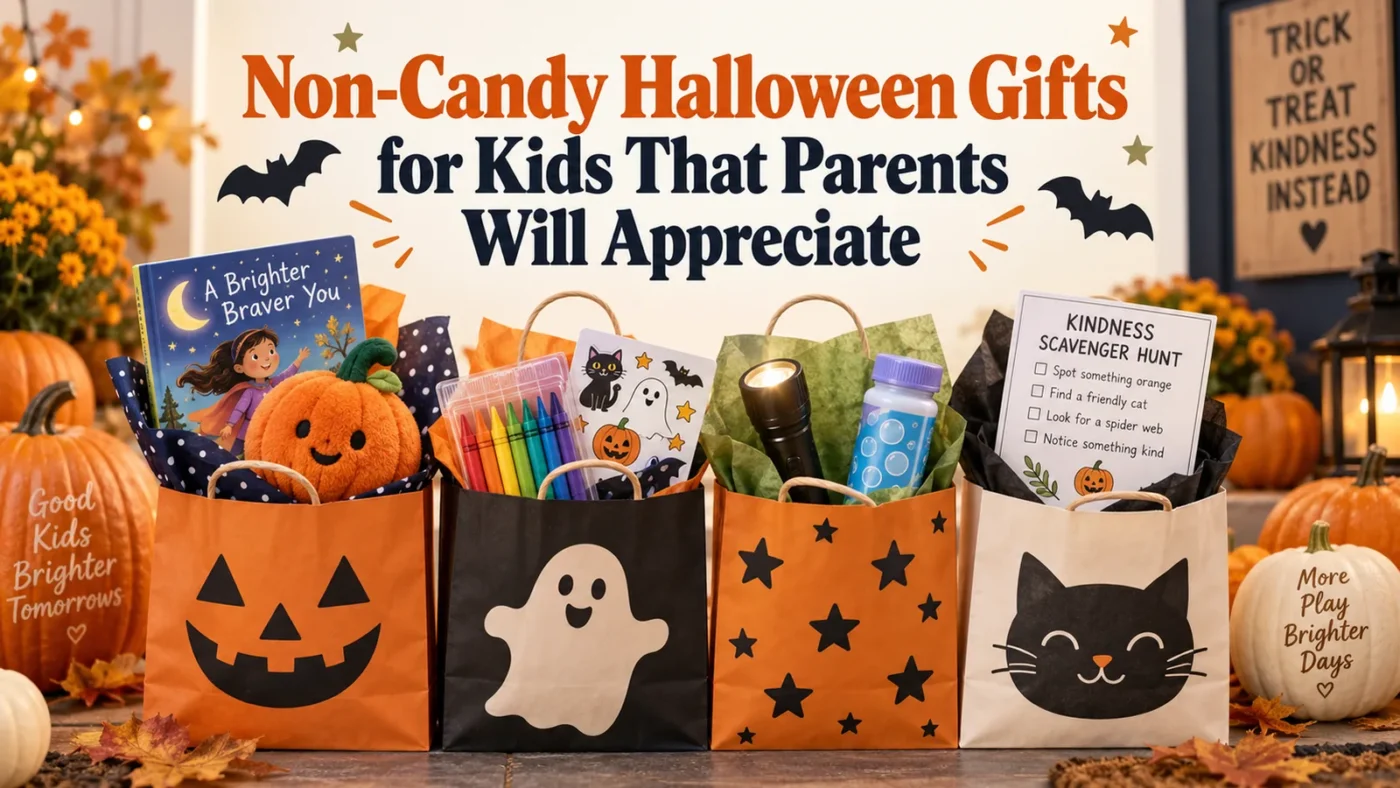
Non-Candy Halloween Gifts for Kids That Parents Will Appreciate
Sep
Age-aware Halloween alternatives that feel fun to children without creating unnecessary sugar, clutter, mess, noise, or work for families.
1. The Short Answer
The best non-candy Halloween gifts for kids are age-appropriate, easy to use, safe for the child’s household, and enjoyable beyond the few minutes it takes to open them. Strong choices include small books, washable art supplies, stickers, activity cards, reusable treat bags, simple outdoor play items, flashlights designed for children, temporary tattoos, puzzles, and coupons for low-cost experiences.
Before buying, ask the parent about age, allergies, school rules, sensory needs, siblings, pets, and any items the family avoids. Read the manufacturer’s age label and warnings. For young children, avoid small parts and loose batteries. A modest item that gets used is more thoughtful than a large bag of plastic novelties that becomes clutter.
Read more: Gift Ideas for Every Occasion: A Year Round Guide
2. What Parents Usually Appreciate
Parents do not need every non-candy gift to be educational or permanent. They usually appreciate gifts that fit the child, work without extra purchases, and do not create a new cleanup project. The ideal gift is complete, durable enough for its purpose, and simple to store or use up.
| Parent-friendly quality | What it means | Good examples | Watch for |
| Age appropriate | Matches skills and safety needs | Board book, large crayons, puzzle | Small parts or advanced instructions |
| Low mess | Contained and easy to clean | Sticker sheet, water drawing, pouch | Glitter, slime, permanent ink |
| Actually usable | Fits a real routine or interest | Flashlight, notebook, outdoor item | Random novelty duplicates |
| Complete | Needs no additional purchase | Ready activity kit, filled craft set | Apps, refills, batteries, subscriptions |
| Easy to share | Does not create sibling conflict | Group game, multiple sheets | One high-interest item for several kids |
| Simple to store | Small, flat, reusable, or consumable | Book, tote, activity cards | Bulky décor and oversized toys |
3. Choose by Age Before Choosing by Theme
A Halloween design does not make an item suitable for every child. Developmental stage, mouthing behavior, reading level, fine-motor skill, supervision, and household circumstances matter more than the character printed on the package. When you are not the parent, follow the labeled age range rather than estimating from the child’s height or confidence.
3.1 Babies and Toddlers
Ask the parent first. Consider a seasonal board book, soft washable toy, large-format bath toy, fabric treat bag, or family experience. Avoid loose parts, magnets, button or coin batteries, cords, brittle decorations, latex balloons, and anything intended for older children. A non-candy gift is not automatically a safe toddler gift.
3.2 Preschoolers
Good directions include large washable crayons, chunky stickers, bubbles used with supervision, simple matching cards, a picture book, soft headband, reusable tote, or an easy paper craft. Choose items that work immediately and do not require precision, reading, or a long attention span.
3.3 Elementary Age Kids
Try an activity booklet, mini flashlight designed for children, small puzzle, joke cards, temporary tattoos, sidewalk chalk, bookmark, notebook, stencil, or outdoor scavenger-hunt card. Match the reading level and avoid items that feel babyish to the recipient.
3.4 Tweens and Older Kids
Older children may prefer a compact puzzle, graphic novel, sketchbook, quality pen, reflective accessory, small hobby supply, photo challenge, card game, or coupon for a seasonal activity. Ask about current interests; a gift chosen only because it says Halloween may feel too young.
4. Creative Gifts Without a Major Cleanup
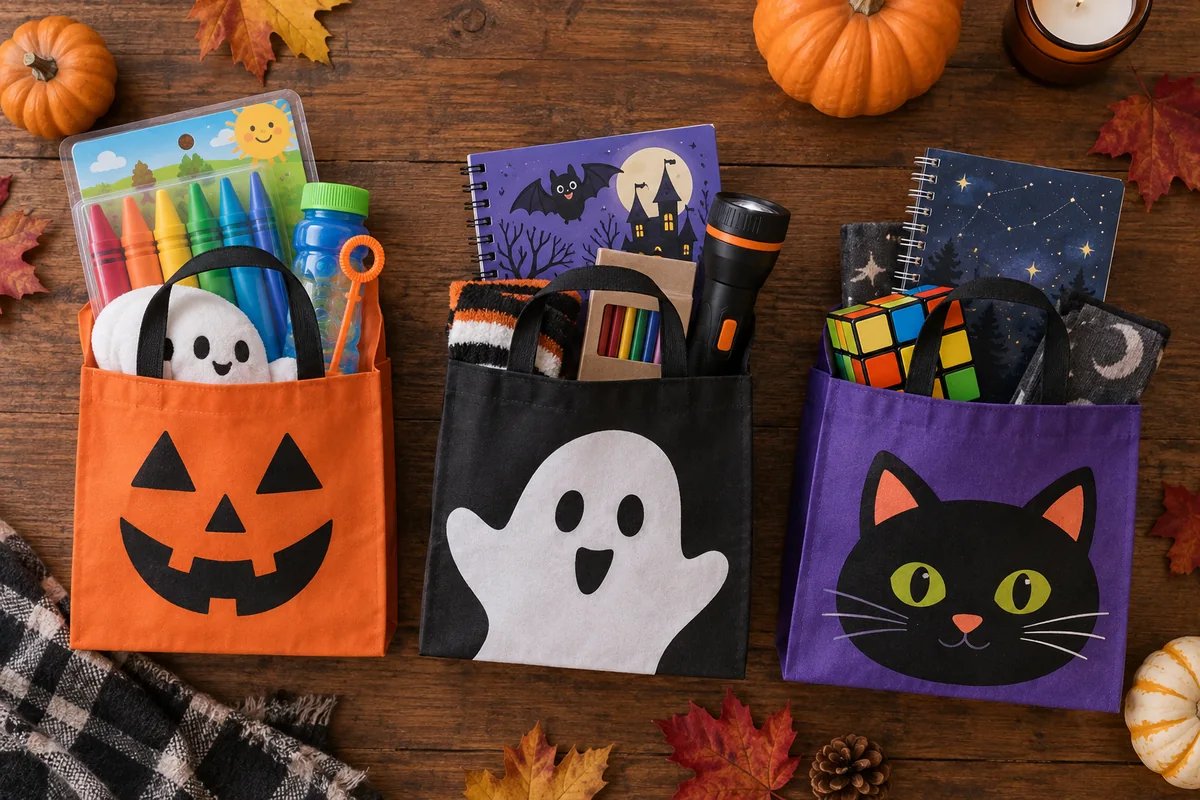
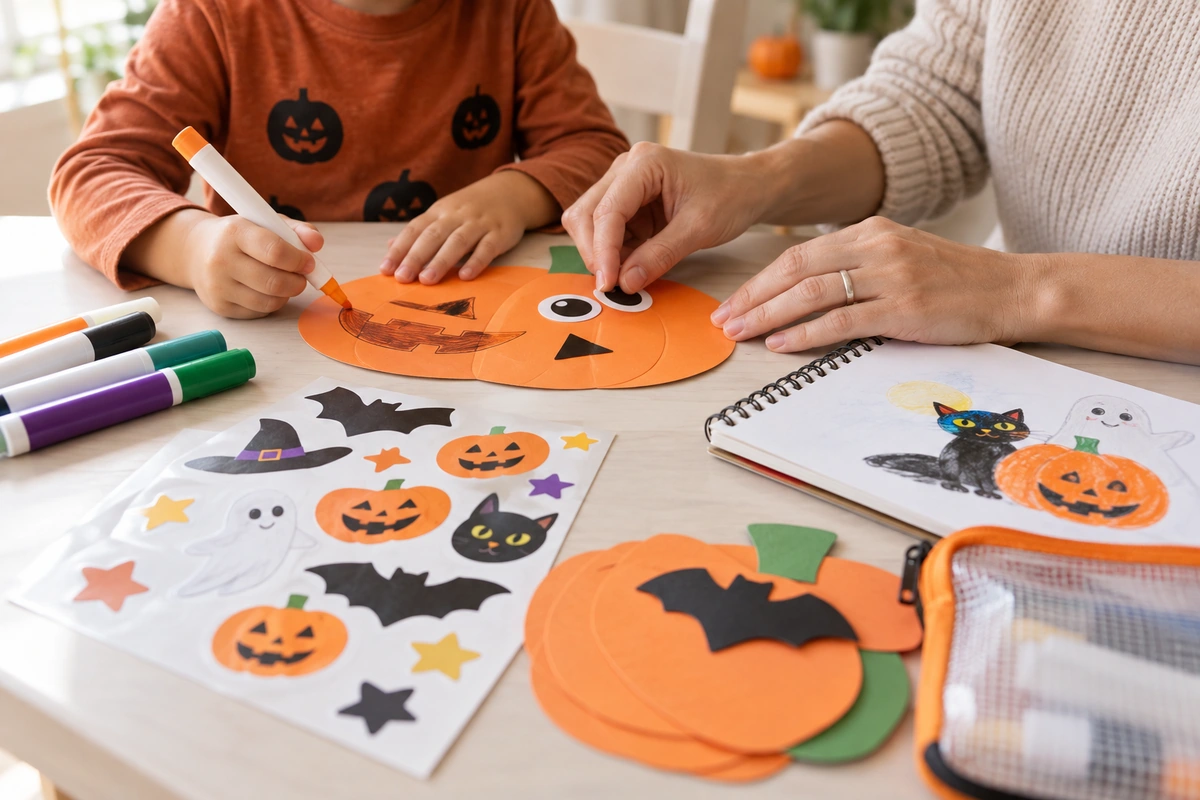
Art supplies can provide more play value than a plastic trinket, but the format matters. Choose washable markers, large stickers, a small sketchbook, reusable stencils, paper shapes, water-paint pages, or a contained craft with only a few steps. Include the needed adhesive or tool when it is age-appropriate.
Avoid loose glitter, permanent markers, strongly scented supplies, stain-prone dye, large quantities of slime, and complicated kits that require a parent to source materials or supervise for an hour. The gift should invite creativity without quietly assigning labor to the household.
5. Books Puzzles and Quiet Activities
A Halloween picture book, early reader, spooky-but-gentle story, activity book, maze, matching game, reusable puzzle, or compact card game can work well at home, in a classroom, or during travel. Choose the reading level, emotional intensity, and number of players carefully.
Not every child enjoys scary images. Look beyond the cover and consider monsters, darkness, suspense, death references, and jump-scare elements. For group gifts, choose activities that can be completed independently or shared without requiring one adult to teach complicated rules.
6. Useful Halloween Gifts for Trick or Treating
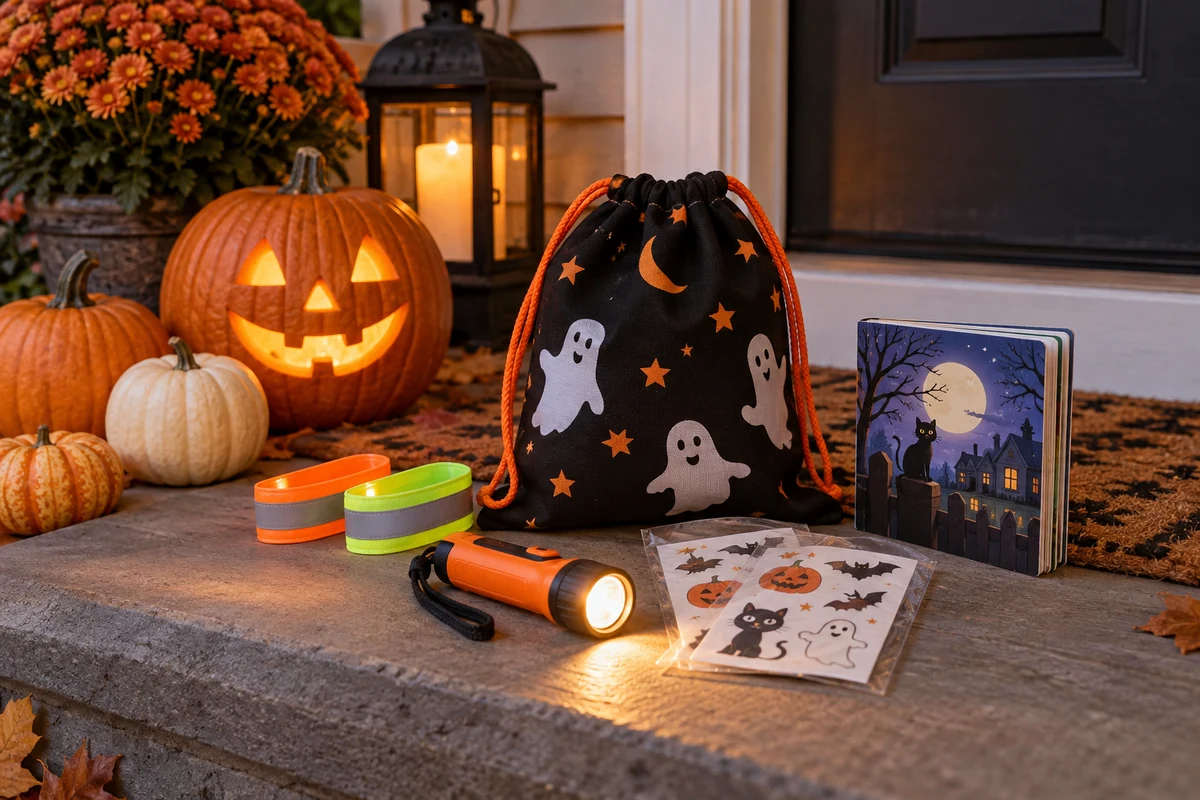
Practical gifts can become part of the celebration. Options include a reusable treat bag, reflective band, clip-on visibility item, child-friendly flashlight, warm socks, rain poncho, simple costume accessory, or name-free bag tag. Safety equipment should supplement adult supervision and local traffic precautions, not replace them.
Check fit, visibility, battery access, materials, and the manufacturer’s age guidance. Any battery compartment should stay securely closed, and adults should control replacement batteries. Avoid sharp costume props, masks that limit vision, and accessories that trail near feet or open flames.
7. Outdoor Play and Movement Gifts
Sidewalk chalk, a soft ball, jump rope for an appropriate age, glow-free scavenger-hunt cards, nature-collecting prompts, or a park challenge can provide an active alternative to candy. Choose an option that fits the family’s space, climate, mobility, and supervision needs.
Do not assume every child wants energetic play or can participate in the same way. Offer flexible activities and avoid framing movement as compensation for eating candy. The gift should support enjoyment, not send a message about the child’s body or behavior.
8. Wearable and Personal Items
Temporary tattoos, socks, hair accessories, shoelace charms, patches, or a simple pin can feel festive without occupying much space. Ask about skin sensitivity, dress codes, sensory preferences, and whether the child enjoys wearing themed items. Avoid makeup and adhesive products when ingredients and instructions are unclear.
Personalization should be discreet. Initials or a favorite motif may work, but avoid putting a child’s full name prominently on something used in public. Verify spelling and ask a parent before using photographs, school names, team details, or location information.
Read more: The Complete Guide to Personalized Gifts That Feel Thoughtful
9. Experience Gifts and Coupons
A printed coupon can promise a pumpkin-decorating afternoon, library visit, neighborhood scavenger hunt, movie night, playground trip, simple baking project, costume photo session, or choice of a bedtime story. The best coupon names a realistic activity, includes the adult responsible, and offers a flexible time window.
Do not give a child an experience that creates transportation, admission, scheduling, or supervision costs for the parent without asking. If you are offering to host or accompany the child, clarify the plan privately with the parent before presenting it.
10. Classroom and Group Gifts
For classrooms, teams, and neighborhood groups, choose inexpensive items that are uniform enough to feel fair and simple enough to distribute. Pencils, bookmarks, sticker sheets, mini activity cards, erasers sized for the age group, or shared craft materials may work when permitted.
Ask the teacher, coach, or organizer about rules before purchasing. Some settings prohibit toys, adhesives, noise makers, costumes, holiday imagery, or items that interrupt instruction. Individually package only when necessary, and avoid creating excessive plastic waste.
11. Budget Planning Without Buying Disposable Filler
Set a per-child budget that includes tax, packaging, and shipping. Buying in multipacks can reduce cost, but only when every item is suitable and useful. A single bookmark or activity sheet can be better than a bag filled with whistles, rings, springs, and tiny toys that break quickly.
For one child, spend on relevance and quality rather than volume. For a group, consider printable activities, paper-based gifts, shared materials, or one reusable item per child. Do not use low price as a reason to ignore age labels or warnings.
Read more: Meaningful Gifts by Budget: Thoughtful Ideas From $10 to $100
12. Safety Checks Before You Give
- Read the age label, warnings, instructions, and required supervision.
- Avoid small parts for children under three and consider younger siblings in the home.
- Avoid loose magnets and products with easily accessible button or coin batteries.
- Check for sharp edges, long cords, brittle pieces, strong scents, and loud sound.
- Use art materials intended for children and follow their labels.
- Keep original packaging or safety information when the parent may need it.
- Check current product recalls before distributing a large quantity.
For U.S. toy requirements and hazard categories, consult the U.S. Consumer Product Safety Commission toy safety guidance. Product labels and a parent’s judgment remain essential.
13. What to Avoid
- Tiny novelty toys selected without checking the labeled age range.
- Noisemakers, whistles, sticky products, glitter, or permanent ink for group distribution.
- Unknown cosmetics, face paint, adhesives, or temporary tattoos without clear instructions.
- Items that need an app, subscription, refill, special battery, or additional purchase.
- Highly frightening imagery for a child whose comfort level you do not know.
- Personalized items that display a child’s full name or private information in public.
- Large plastic bundles designed to look generous but likely to be discarded.
- Giving the same item to siblings when its age suitability differs.
14. A Seven Question Parent Friendly Gift Test
- Is the item labeled for this child’s age and developmental stage?
- Could small parts, batteries, magnets, cords, sound, or materials create a hazard?
- Will the child understand and enjoy it without extensive adult setup?
- Does it create mess, noise, clutter, competition, or another purchase?
- Does it fit the family’s rules, space, schedule, pets, and younger siblings?
- Can it be used, shared, stored, recycled, or passed along easily?
- Would I still choose it if the Halloween design were removed?
If several answers are uncertain, ask the parent or choose a book, paper activity, reusable bag, or flexible experience. Parent approval is part of making a child’s gift thoughtful.
Read more: How to Choose a Meaningful Gift for Anyone
15. Frequently Asked Questions
15.1 What are good non-candy Halloween gifts for kids?
Good options include age-appropriate books, washable art supplies, stickers, activity cards, puzzles, reusable bags, practical visibility items, notebooks, and simple experience coupons.
15.2 What can I give toddlers instead of candy?
Ask the parent first. Consider a board book, soft washable toy, fabric bag, or family activity. Avoid small parts, loose magnets, accessible batteries, cords, and products labeled for older children.
15.3 What non-candy gifts work for a classroom?
Bookmarks, pencils, sticker sheets, paper activities, or teacher-approved shared materials can work. Confirm classroom rules, age suitability, and distribution requirements before buying.
15.4 Are glow sticks a good Halloween alternative?
They are popular, but they can leak if damaged and are not suitable for every age or setting. Follow the label and supervision instructions; reflective gear or a child-friendly flashlight may be a more reusable option.
15.5 How can I avoid giving parents more clutter?
Choose consumable art materials, paper activities, books, practical items, reusable bags, or experiences. Give one useful item instead of a bundle of small novelties.
15.6 Should I ask parents before giving non-candy gifts?
Yes when the child is very young, has allergies or sensory needs, receives a wearable or cosmetic item, or when the gift involves an outing, noise, batteries, pets, or multiple siblings.
16. Final Thought
A successful non-candy Halloween gift does not merely replace sugar with plastic. It gives a child something enjoyable while respecting the family that will store, supervise, clean, and live with it. Start with age and safety, choose one useful or engaging direction, and remove hidden work. When children feel included and parents do not inherit a problem, the gift has done its job.
