
Gifts by Recipient
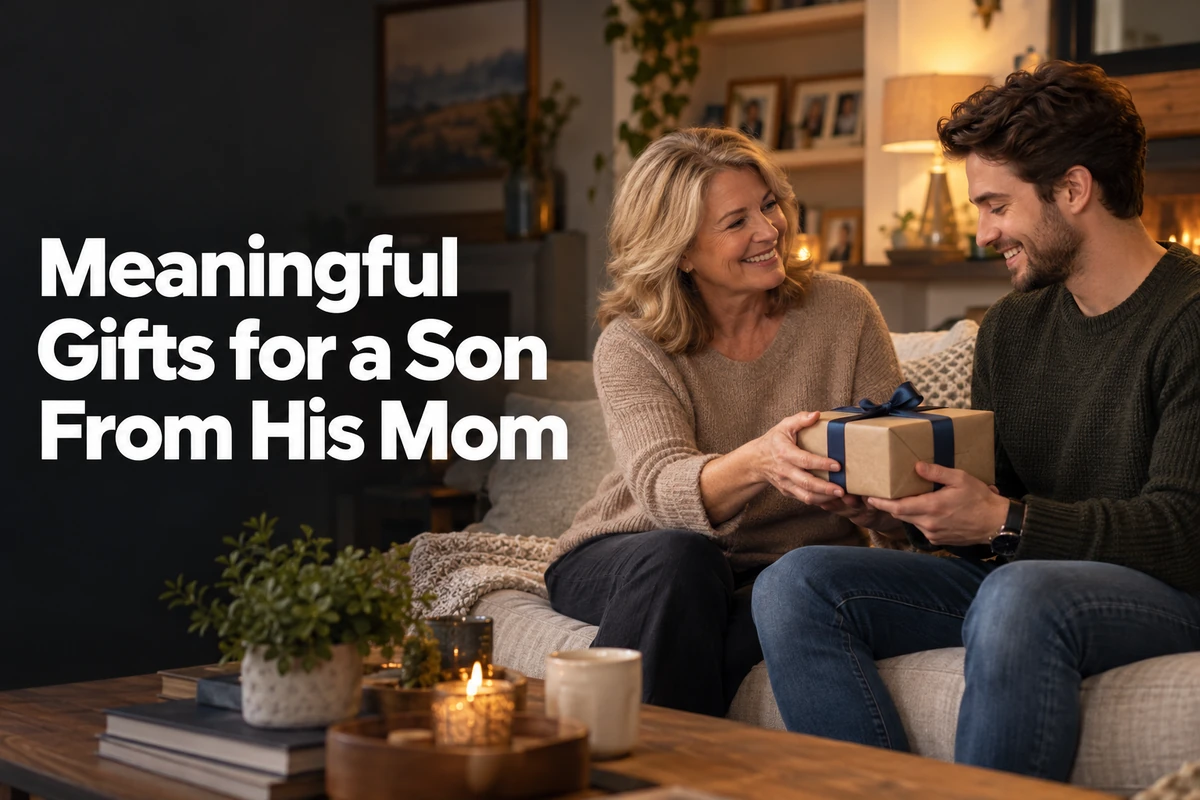
Meaningful Gifts for a Son From His Mom: Personal Without Being Overly Sentimental
Oct
The best gift does not try to recreate childhood or produce a dramatic reaction. It shows that a mother sees the adult her son has become and respects how he prefers to receive care.
1. Start With Who Your Son Is Now
A meaningful gift from a mother does not need to summarize an entire childhood. It needs to recognize the person her son is now. Before choosing anything, consider his current season of life. Is he building a career, living on his own for the first time, raising a family, recovering from a demanding year, or simplifying what he owns? A gift becomes personal when it meets the life in front of him rather than the boy you remember.
Pay attention to what he uses repeatedly, what he postpones buying, and what makes his daily routine easier. These quiet observations often lead to better gifts than direct questions about what he wants. They also prevent the present from feeling like advice, correction, or an attempt to manage his choices.
The right starting question is not how to make him emotional. It is what would make him feel accurately known.
2. Personal Does Not Have to Mean Emotional
Some sons welcome long letters, childhood photographs, and family keepsakes. Others value affection but prefer it expressed through practical help, shared time, humor, or a well-chosen object. Neither response reflects the depth of the relationship.
Personalization can be subtle. It may be the exact model of a tool he once borrowed, a book connected to a recent conversation, or tickets that fit his schedule. The meaning comes from attention, not from adding a name, date, or emotional message to every item.
If your son tends to feel uncomfortable with sentimental gifts, let the present carry most of the message. A brief card can say that you noticed what he enjoys and hoped this would be useful.
3. Match the Gift to the Way He Receives Care
Think about what your son notices most. A practical person may appreciate an upgrade to something he already uses. Someone who protects his free time may value a planned experience. A son who keeps small mementos may enjoy one carefully selected family object. A busy parent may prefer help that creates breathing room.
Do not force a category because it appears meaningful in a gift guide. A personalized journal is thoughtful only if he writes. A framed childhood photo is meaningful only if he enjoys displaying family photographs. A surprise trip is generous only if it respects his calendar and responsibilities.
The most successful gift reflects his preferences rather than the giver’s preferred expression of love.
4. Useful Upgrades He May Not Buy for Himself
A personal gift can be practical, well chosen, and easy to use.
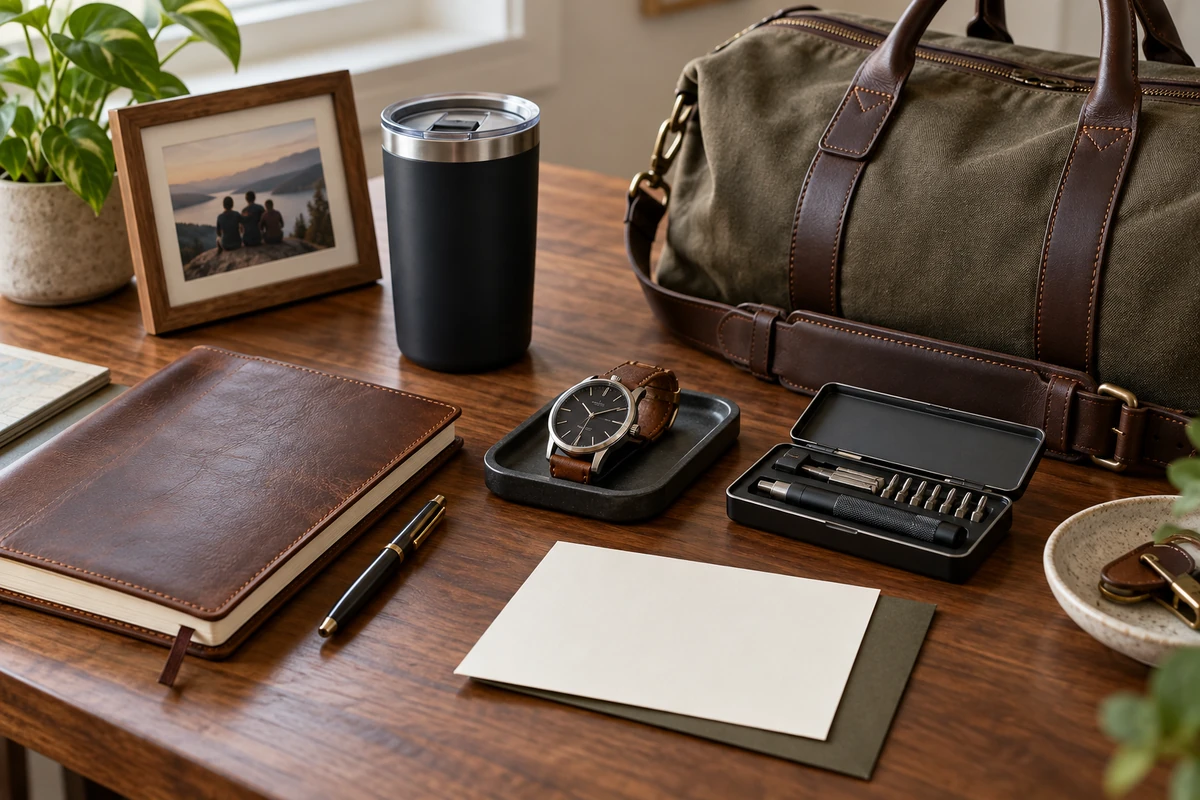
A useful gift can feel deeply personal when it improves a familiar part of his life. Consider a durable weekender bag, a quality wallet, an insulated travel mug, a reliable kitchen knife, upgraded bedding, a compact tool kit, or a well-made notebook. Choose an item that solves an existing inconvenience rather than creating a new hobby or obligation.
Look for the point between ordinary and extravagant. The best upgrade is noticeably better than the version he would buy quickly, but not so expensive that he worries about using it. Neutral materials and simple design reduce the risk of choosing the wrong style.
If fit, technical specifications, or brand compatibility matter, ask for details or include a gift receipt. Practicality is not less thoughtful when it protects his freedom to exchange the item.
5. Gifts Connected to His Current Interests
A gift tied to a genuine interest says that you listen to the adult he has become. For a home cook, choose a useful ingredient, class, or tool he has mentioned. For a runner or cyclist, consider a recovery item, entry fee, or practical accessory after confirming compatibility. For a reader, select a special edition only when you know the title matters to him.
Avoid buying entry-level equipment for a serious hobby unless he has asked for it. Enthusiasts often have precise preferences. A gift card to a trusted specialty store, paired with a note explaining why you chose it, can be more respectful than guessing.
You can also support the interest without buying equipment. Offer time together at a game, museum, trail, concert, workshop, or local event.
6. A Small Keepsake With a Clear Story
A keepsake works best when it preserves one specific connection. Instead of creating a large collection of childhood memorabilia, choose a single photograph, recipe, map, ticket, tool, or family object with a story he already understands.
Add a short note describing why you saved it and why you are giving it now. Keep the explanation factual and warm. For example, you might mention that the photograph captures a trip you both still discuss, or that a recipe represents many ordinary evenings at home.
Give original family items only when you are ready to release ownership. If the item is irreplaceable or carries responsibilities for storage and preservation, ask whether he wants it first.
7. Experiences That Do Not Demand a Big Reaction
Experiences can create connection without asking your son to display the gift. Good options include a meal at a place he wants to try, tickets to a game or show, a class related to an existing interest, a day trip, or a reservation for an activity you can enjoy together.
Keep the invitation flexible. Adult sons may have partners, children, work, and limited weekends. Offer possible dates or let him choose. Make it clear whether the experience is for the two of you, for him and a guest, or for his household.
If he values independence, provide the experience without assuming you will attend. A gift can support connection while still giving him control.
8. Gifts That Make a Busy Season Easier
When life is demanding, relief may be more meaningful than another object. Consider meal delivery credit, professional car cleaning, a housecleaning session, childcare you can reliably provide, help with a practical project, or a contribution toward something he is already planning.
Help should be offered without taking over. Do not use a gift to reorganize his home, change his habits, or solve a problem he has not asked you to solve. Services should be flexible, reputable, and easy to schedule.
For a son with a partner or family, consider how the gift affects the household. A useful shared service may be welcome, while a personal plan that creates extra work for someone else may not be.
9. Personalized Gifts That Stay Understated

A quiet gift exchange allows affection to feel natural rather than performative.
If you personalize an item, keep the detail small and functional. Initials inside a wallet, a date on the back of a watch, coordinates connected to a meaningful place, or a short phrase hidden inside a notebook can feel private rather than performative.
Confirm spelling, dates, and preferences before ordering. Avoid lengthy inscriptions, public declarations, or labels that define him through the relationship alone. He is your son, but he also has an identity beyond being someone’s child.
An unpersonalized item with a specific handwritten note is often safer and more flexible than permanent engraving.
10. Gifts for a Son Who Says He Does Not Need Anything
Take his answer seriously. He may be protecting his space, budget boundaries, or desire to avoid more possessions. Shift from objects to consumption, experience, service, or time.
A favorite meal, quality everyday food, digital subscription he already uses, donation to a cause he supports, or planned afternoon together may fit better. You can also replace something worn out after confirming he wants a replacement.
Do not turn the search into a contest to find an item he cannot refuse. Respecting no more stuff can itself be a meaningful expression of care.
11. What to Avoid
Avoid gifts that correct his appearance, home, career, health, relationships, or finances unless he explicitly requested help. Exercise equipment, self-improvement books, grooming products, furniture, and financial tools can carry an unintended message.
Be cautious with childhood-themed gifts, especially in front of other people. A private memory may feel affectionate to you but embarrassing to him. Likewise, do not compare him with siblings or attach expectations about marriage, children, success, or how often he visits.
The gift should not require an emotional performance. Give it without asking whether he loves it, whether he remembers the story, or why he has not displayed it.
12. How Much Should a Mom Spend?
There is no required amount. A meaningful gift may cost under $25 or considerably more, depending on the occasion, family finances, and established habits. The right budget is one that does not create strain for the giver or obligation for the recipient.
For an ordinary birthday or just-because gift, modest spending allows the gesture to remain relaxed. For graduation, a major move, marriage, or another transition, a larger contribution may be appropriate if it is clearly offered without control.
When siblings are involved, fairness does not always mean identical prices. Try to remain consistent in care and transparency, especially when gifts include significant money.
13. Write a Card He Can Actually Receive
A good note is specific, brief, and free from hidden requests. Mention one quality you respect, one current effort you notice, or one reason the gift made you think of him. Then offer warm wishes without turning the card into a complete history of the relationship.
You might write: I saw this and thought it would fit the way you travel. I admire how thoughtfully you have built your life, and I hope you enjoy it. Another option is: No big speech. I simply wanted to give you something connected to a memory I still value.
Avoid guilt, references to sacrifice, requests for more contact, or statements suggesting he owes you a particular reaction. If a conversation is needed, have it separately from the gift.
14. A Quick Selection Method
First, name the occasion and decide whether the gift should celebrate, support, replace, preserve, or create time together. Second, choose the part of his current life the gift will serve. Third, remove any option that creates clutter, embarrassment, scheduling pressure, or an implied lesson.
If two choices remain, select the one that gives him more control. A flexible reservation is safer than a fixed trip. A gift receipt is better than insisting on the perfect size. One meaningful photo is easier to receive than a large album.
Finally, add a short note that explains the connection without explaining his feelings for him.
15. Frequently Asked Questions
What is a meaningful gift for an adult son? Choose something connected to his present routines, interests, values, or a shared memory he genuinely appreciates.
Are sentimental gifts a bad idea? No. They work when they match his personality and are given privately without demanding a strong reaction.
Should a mother personalize the gift? Only when the personalization is accurate, understated, and likely to suit how he will use the item.
What if he already buys what he wants? Choose an experience, consumable, practical service, contribution to an existing plan, or time together.
Is money an appropriate gift? It can be, especially for a transition or a clearly identified goal. Offer it without instructions unless the purpose was agreed in advance.
Should the gift include his partner or family? For household experiences or services, yes when appropriate. A mother can still give her son an individual gift without excluding others.
What if he does not react emotionally? A quiet thank-you may be his natural response. Do not use his reaction as the measure of the gift or the relationship.
16. Meaning Comes From Recognition, Not Intensity
The most meaningful gift from a mother often feels simple: it recognizes who her son is, respects the life he has built, and carries affection without placing him under emotional pressure.
Choose usefulness, relevance, or one honest memory. Keep the message brief enough to feel natural. Then give the present freely. A son does not need to be overwhelmed by a gift to understand that his mother knows and cares about him.
