
Gifts by Occasion
Meaningful Friendsgiving Gifts for the Host and Guests
Oct
Thoughtful ideas that celebrate chosen family without creating obligation
Meaningful Friendsgiving Gifts for the Host and Guests
Friendsgiving is built around chosen family, shared effort, and a table that rarely follows one fixed tradition. That freedom makes the gathering warm, but it can also make gift etiquette confusing. Should every guest bring something for the host? Should the host prepare favors for everyone? Does a potluck dish count as a gift?
The simplest answer is that gifts are optional. A meaningful Friendsgiving gift should support the gathering, preserve the friendship, or give someone a small reminder of the evening. It should not create an unofficial entrance fee, a gift exchange nobody expected, or additional work for the host.
This guide separates host gifts from guest gifts, explains how to set expectations, and offers practical ideas for different budgets and group styles.
1. Decide What the Gift Is Meant to Do
Before choosing an item, identify its purpose. A host gift thanks one person for opening a home and coordinating the gathering. A guest gift is usually a small favor offered equally to everyone. A shared activity gift helps the group create a memory together.
Those purposes should not be mixed without explanation. If one guest receives an expensive personal gift while everyone else receives a small favor, the difference can feel awkward. If the host expected only a potluck contribution, arriving with gifts for all may create pressure for others.
Choose one clear intention:
• Thank the host for planning and welcoming everyone
• Give each guest a small take-home reminder
• Contribute something the group can enjoy together
• Recognize a friend who carried an unusually large part of the work
Once the purpose is clear, the right budget and presentation become easier.
2. Does a Potluck Contribution Count as a Host Gift
Bringing an assigned dish, drinks, ice, serving utensils, or extra chairs is a contribution to the meal. It is valuable, but it is not automatically a personal gift for the host. That distinction does not mean you need both.
If the gathering is casual and everyone contributes, fulfilling your assignment on time may be all that is expected. A separate host gift is optional. If the host is providing most of the meal, preparing the home, and managing cleanup, a small gift can be a considerate addition.
Do not bring an unplanned dish that needs oven or refrigerator space and present it as a favor. Ask first. A host gift should reduce pressure, not introduce another serving decision.
3. How Much to Spend on a Friendsgiving Host Gift
For most Friendsgiving gatherings, 10 to 30 dollars is a comfortable range for an individual host gift. Close friends may spend more for an overnight stay or a major annual tradition, but price is not the main signal of appreciation.
Use these ranges as flexible guidance:
• Under 10 dollars for a heartfelt card, favorite snack, tea, or a small practical item
• 10 to 20 dollars for a pantry gift, candle, plant, kitchen textile, or modest gift card
• 20 to 30 dollars for a more complete host gift or contribution from a couple
• A shared group contribution when several people want to recognize the host together
Avoid turning Friendsgiving into a comparison of who brought the best gift. A sincere 12 dollar item connected to the host will usually feel more natural than a 60 dollar gift that changes the tone of the evening.
4. Host Gifts That Can Be Enjoyed Later
The safest host gifts do not need to be opened, served, displayed, or managed during the meal.
A recovery breakfast kit
Pair coffee or tea with a small loaf, preserves, or pancake mix for the morning after. Choose sealed items and include a note that makes clear the gift is for later.
A practical cleanup upgrade
A quality kitchen towel, gentle dish soap, reusable food containers, or compostable storage bags can acknowledge the work after dinner. Avoid giving cleaning products as a joke or implying the home needs improvement.
A low-pressure pantry gift
Olive oil, maple syrup, honey, tea, coffee, or preserves can be used after the gathering. Select items with clear ingredients and a reasonable shelf life.
A small plant or arranged flowers
A compact plant or flowers already placed in a container avoid sending the host to search for a vase. Check pet safety when possible.
A memory from the group
A printed photo from a previous Friendsgiving, a small album, or a collection of brief messages can suit an established tradition. Keep the project compact enough to store easily.
5. Friendsgiving Gifts for Guests That Do Not Feel Like Party Favors
Guest gifts are most meaningful when they connect to the evening without becoming disposable clutter. They should be small, similar in value, and easy to carry home.
A handwritten gratitude card
Write one specific thing you appreciate about each friend. This requires more thought than money and can become the most memorable part of the gift.
A small edible gift
Mini jars of preserves, individually wrapped tea, spice blends, cookies with ingredient labels, or take-home snack bags work well. Consider allergies and dietary needs.
A useful table item
A cloth napkin, simple coaster, small wooden spoon, or recipe card can serve a purpose beyond the event. Avoid adding names unless you are confident each person will use the item.
A seed packet or tiny plant
Herbs or easy-to-grow flowers can symbolize friendship continuing beyond one dinner. Include basic care instructions and avoid unsafe plants around pets.
A shared digital memory
A photo album link sent after the gathering costs nothing and includes everyone. Ask before posting identifiable images publicly.
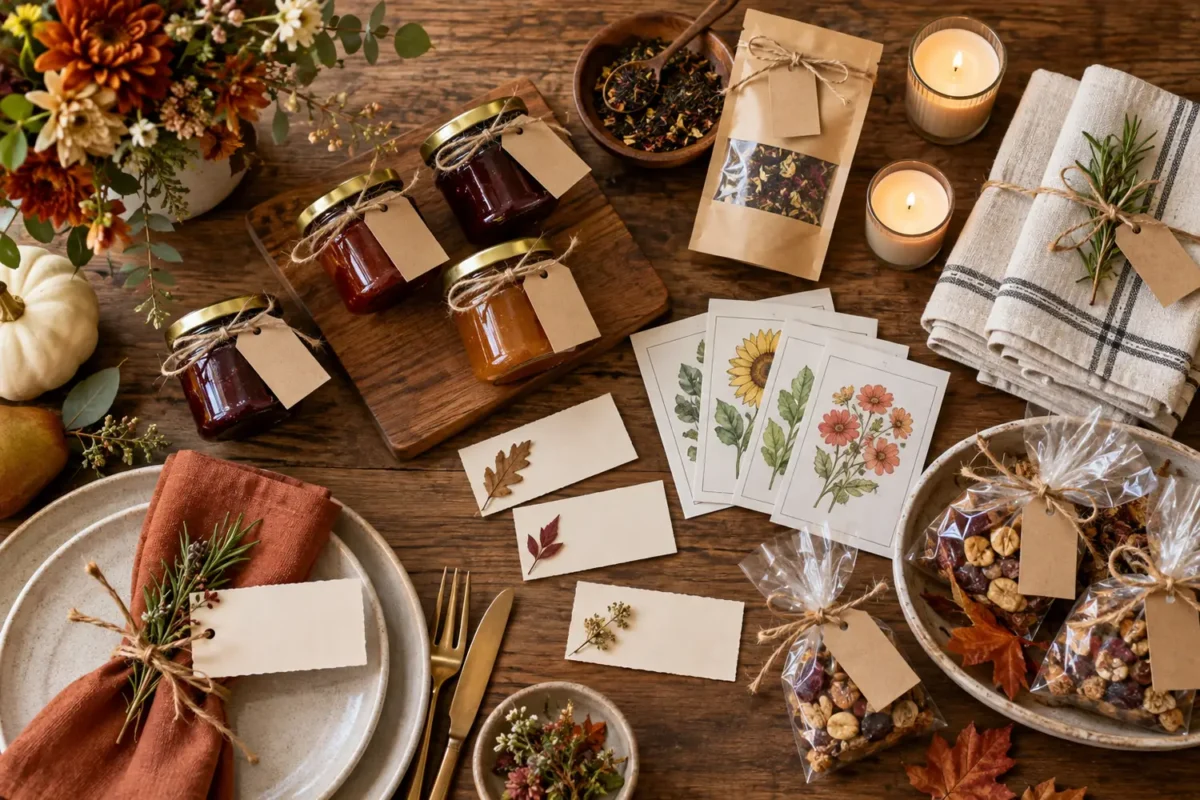
Friendsgiving gift ideas including preserves, tea, candles, towels, cards, and take-home treats
Small useful or consumable gifts can connect to the gathering without becoming disposable clutter.
6. Gifts the Group Can Experience Together
Not every gift needs to leave the house. A group-centered gift can add meaning to the gathering without requiring favors for every person.
Bring a simple conversation-card activity, a disposable camera, a blank gratitude journal, or materials for everyone to write one memory from the year. The activity should be easy to decline and should not force guests to reveal private information.
Another option is to contribute toward a future shared experience. A picnic fund, museum plan, or group cooking night can extend the feeling of Friendsgiving. Make the suggestion after dinner rather than asking guests to commit money during the event.
Experience gifts work best when the group already enjoys spending time together and the plan has clear flexibility.
7. How to Include New Friends and Plus Ones
Friendsgiving often brings together people who do not all know one another. If the host gives guest favors, every invited person should receive one, including plus ones and last-minute additions when possible.
Avoid highly personalized inside jokes that make newcomers feel like observers. A neutral take-home treat plus a handwritten welcome message is more inclusive. If you want to give close friends a separate personal gift, do it privately on another occasion.
Hosts can keep one or two extra favors ready. Guests should not be asked to explain why they did not bring gifts. The gathering should remain accessible to people with different budgets and traditions.
8. Non-Alcoholic Gifts Are Often the Most Inclusive
Wine may seem like a standard host gift, but Friendsgiving groups can include people who abstain for health, faith, pregnancy, recovery, medication, or personal preference. Unless you know alcohol is welcome, choose something else.
Tea, coffee, sparkling cider, drinking chocolate, botanical beverages, or a pantry gift can feel equally celebratory. If you bring a beverage for the meal, coordinate with the host and provide enough for the group rather than presenting one bottle as the host’s private gift.
9. Personalization Without Creating Clutter
Personalization should add meaning, not merely add a name to an object. Good personalization can reference a shared recipe, a recurring joke that includes the recipient rather than embarrassing them, a photo, a neighborhood, or a tradition the group created together.
Useful options include a recipe booklet containing dishes from previous gatherings, a small photo book, a map showing where friends met, or a card with individual messages. Avoid large signs, matching novelty objects, and decorations that guests may feel obligated to display.
Ask whether the object would still be useful if the printed name or date were removed. If the answer is no, the personalization may be doing too much work.
10. Dietary Allergies and Household Preferences
Food gifts need clear labels. Ask about allergies, vegetarian or vegan preferences, religious restrictions, and whether homemade items are welcome. When the group is large, one short message from the host can collect this information without singling anyone out.
Avoid assuming that gluten-free, sugar-free, or vegan automatically means safe for every person. Cross-contact and specific ingredients still matter. Sealed commercial products are often easier for guests to evaluate than unlabelled homemade treats.
If preferences are unknown, choose a non-food gift or provide several clearly separated options. Do not pressure anyone to explain why they decline a gift.
11. Presentation and Timing
Give the host gift quietly at arrival and say that it is for later. The host does not need to open it while greeting guests or finishing dinner. Keep wrapping compact and easy to recycle.
Guest gifts can be placed at each seat, arranged near the exit, or distributed after dinner. If they are edible, do not place them where they may be mistaken for part of the meal. For a gratitude-card exchange, explain the activity before distributing cards so participation feels intentional rather than confusing.
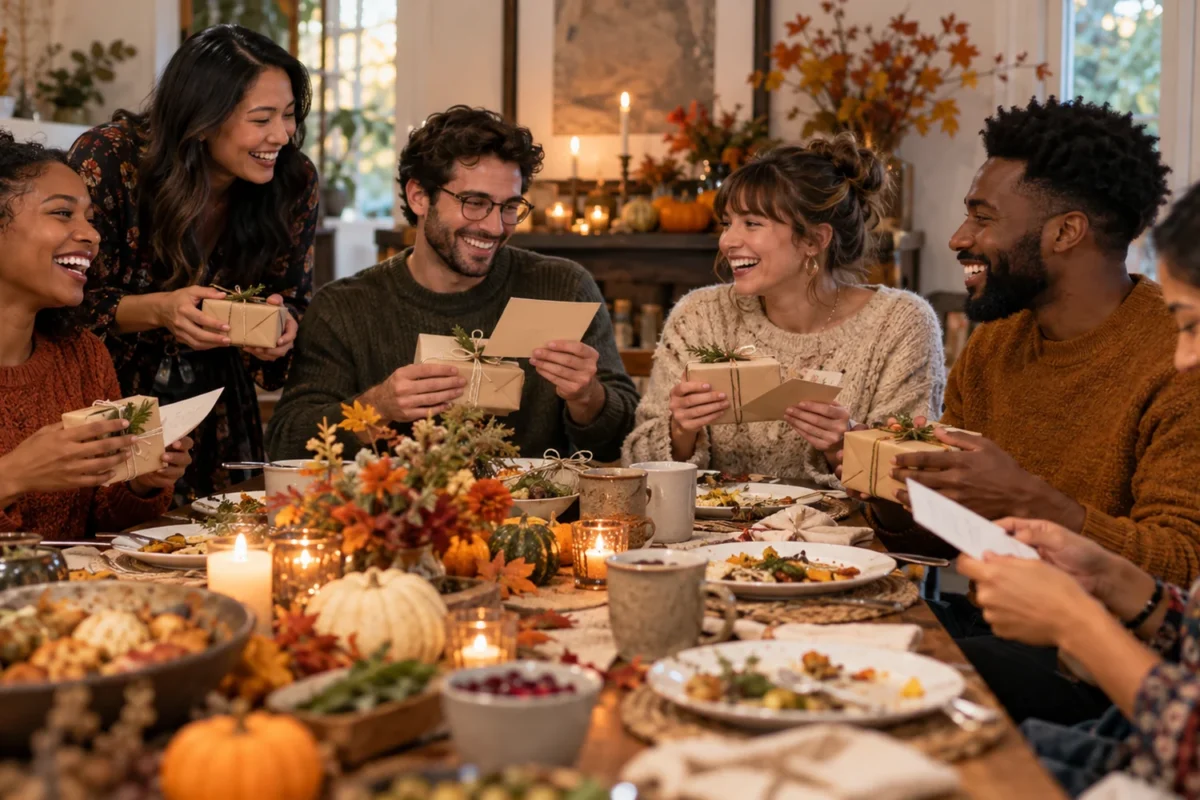
Friends exchanging modest gifts and gratitude cards after a Friendsgiving meal
Equal, modest gifts and gratitude cards keep the exchange inclusive and focused on friendship.
12. Friendsgiving Gift Etiquette for Hosts
Hosts are not required to provide favors. The invitation, meal coordination, and space are already forms of generosity. If you choose to give guest gifts, keep them modest and equal enough that no one feels ranked.
Do not announce how much the gifts cost or suggest that guests should reciprocate next year. Avoid collecting required money for a surprise exchange unless everyone agreed in advance. A voluntary white elephant or secret gift activity needs a clear budget, date, and opt-out option.
If a guest brings you a gift, thank them warmly without comparing it to what others brought. If someone arrives empty-handed, welcome them exactly the same way.
13. Friendsgiving Gift Etiquette for Guests
Guests should follow the host’s plan. Bring the assigned dish in a ready-to-serve container, arrive close to the agreed time, and offer help without taking control of the kitchen.
A host gift is optional. If you bring one, avoid anything that must be served immediately. Do not distribute surprise gifts to only part of the group in front of everyone. If the event includes a gift exchange, stay within the agreed budget.
One of the most meaningful contributions may happen after the dinner. Send a thank-you message, share photos privately, return borrowed containers, and offer specific help with cleanup or the next gathering.
14. A Quick Gift Decision Guide
Use this sequence when you are unsure:
1. Confirm whether gifts or only food contributions are expected.
2. Decide whether the gift is for the host, every guest, or the group.
3. Set a budget that no one needs to match.
4. Check dietary, alcohol, pet, and household preferences.
5. Choose something useful, consumable, experiential, or emotionally specific.
6. Make participation optional and include newcomers.
7. Present the gift without requiring an immediate reaction.
If the plan begins to feel complicated, simplify it. A card, a labeled pantry gift, or help with cleanup can carry more meaning than an elaborate exchange.
15. Frequently Asked Questions
Should every guest bring the Friendsgiving host a gift
No. A host gift is optional, especially when guests are already contributing food, drinks, setup, or cleanup. One small gift from the group can also work.
How much should I spend on a Friendsgiving host gift
About 10 to 30 dollars is appropriate for many casual gatherings. Spend less when you are also bringing a substantial dish or when the group has agreed to keep the event low-cost.
Should the host give gifts to all guests
No. Favors are optional. If the host chooses to provide them, small useful or edible items offered equally are usually best.
Is a gift exchange a good Friendsgiving activity
It can be, but only when guests agree in advance. Set a clear budget and allow people to opt out without embarrassment.
Can I bring wine as a Friendsgiving gift
Only when you know alcohol is welcome. Otherwise choose a non-alcoholic beverage, tea, coffee, or pantry gift.
What is a meaningful no-cost Friendsgiving gift
A specific gratitude letter, shared digital photo album, playlist, recipe collection, or help with cleanup can all be meaningful without requiring a purchase.
What should I give a Friendsgiving host I do not know well
Choose a modest low-assumption gift such as tea, coffee, olive oil, preserves, or a neutral kitchen towel. Make clear that it can be enjoyed later.
16. Final Thought
The best Friendsgiving gifts reinforce belonging rather than obligation. Thank the host for the work behind the evening, include every guest who is present, and choose gestures that fit the relaxed spirit of chosen family.
A useful gift may be consumed. A favor may be taken home. A card may remain in a drawer for years. What makes any of them meaningful is the clear message that the friendship and the shared time were noticed.
