Gifts by Occasion
How to Choose a Thanksgiving Gift for a Host You Do Not Know Well

Oct
A practical guide to gracious gifts that do not create pressure or extra work
How to Choose a Thanksgiving Gift for a Host You Do Not Know Well
Being invited to Thanksgiving by someone you barely know can feel both generous and slightly complicated. You want to arrive with something considerate, but you may not know the host’s taste, dietary needs, household rules, or feelings about gifts. The safest answer is not to find the most impressive object. It is to choose a modest gesture that communicates appreciation without creating work, obligation, or clutter.
This guide explains how to make that decision with limited information. It includes reliable gift categories, questions worth asking, common mistakes to avoid, and simple ways to present the gift so the host can receive it without interrupting the meal.
1. Start With the Purpose of a Thanksgiving Host Gift
A host gift is a thank-you, not an admission fee. The host has planned a meal, prepared a space, coordinated guests, and accepted responsibility for the day. Your gift recognizes that effort. It does not need to match the cost of dinner, prove your taste, or earn special attention.
This matters even more when the relationship is new. A large or highly personal gift can make the host wonder whether a return gesture is expected. A small, complete gift is usually warmer because its meaning is easy to understand.
Use one sentence as your decision rule: choose something the host can enjoy later, without needing to serve, display, store, or explain it immediately.
2. Learn What You Can Without Turning It Into an Interview
You do not need a detailed profile of the host. A few practical facts prevent most poor choices. Ask the person who invited you, or a mutual friend, whether the gathering is casual or formal, whether children or pets live in the home, and whether the household avoids alcohol or particular foods.
If no mutual contact is available, one short message is enough:
I am looking forward to joining you. Is there anything useful I can bring, or would you prefer that guests simply come and enjoy the meal?
When the host says nothing, accept the answer. Do not arrive with an unrequested side dish that needs oven space. Bring a small host gift that can be set aside.
3. Use the Low Assumption Test
The less you know about a person, the fewer assumptions your gift should make. Before buying, ask four questions:
• Does this require a specific taste, size, scent, diet, or decorating style?
• Does the host need to use it during Thanksgiving dinner?
• Could it feel unusually expensive or intimate?
• Is it easy to pass along, share, consume, or store if it is not a perfect match?
A strong unfamiliar-host gift passes at least three of these tests. Neutral packaging, moderate value, and flexible use are more helpful than novelty.
For example, a simple box of quality tea makes fewer assumptions than a strongly scented body set. A neutral linen towel makes fewer assumptions than a decorative sign with a slogan. A small jar of local preserves makes fewer assumptions than a large refrigerated dessert.
4. Choose From the Safest Gift Categories
Some categories work well because they are useful, consumable, and easy to receive. They still require a little judgment, but they reduce the risk of making the host manage your gift.
4.1 A modest pantry gift
Good olive oil, maple syrup, honey, preserves, coffee, or a small tea assortment can be used after the holiday. Choose sealed items with clear ingredient information. Avoid presenting the item as something that must be opened for dinner.
4.2 A neutral kitchen textile
A quality dish towel, cloth napkin set, or simple bread basket liner can feel seasonal without becoming permanent decor. Choose washable fabric and restrained colors such as cream, olive, rust, or charcoal.
4.3 A small seasonal plant
A compact potted herb, succulent, or autumn plant may suit a host who enjoys greenery. Keep it small enough to place on a counter and avoid plants that are unsafe around pets unless you know the household.
4.4 Unscented candles
Unscented taper candles are safer than fragranced candles because scent is personal and can conflict with food. Select a standard size and a neutral color. Do not assume the host wants to light them during dinner.
4.5 A locally made item
A modest food item from your neighborhood can create conversation without pretending that you know the host deeply. The story should be brief and the gift should still be useful on its own.
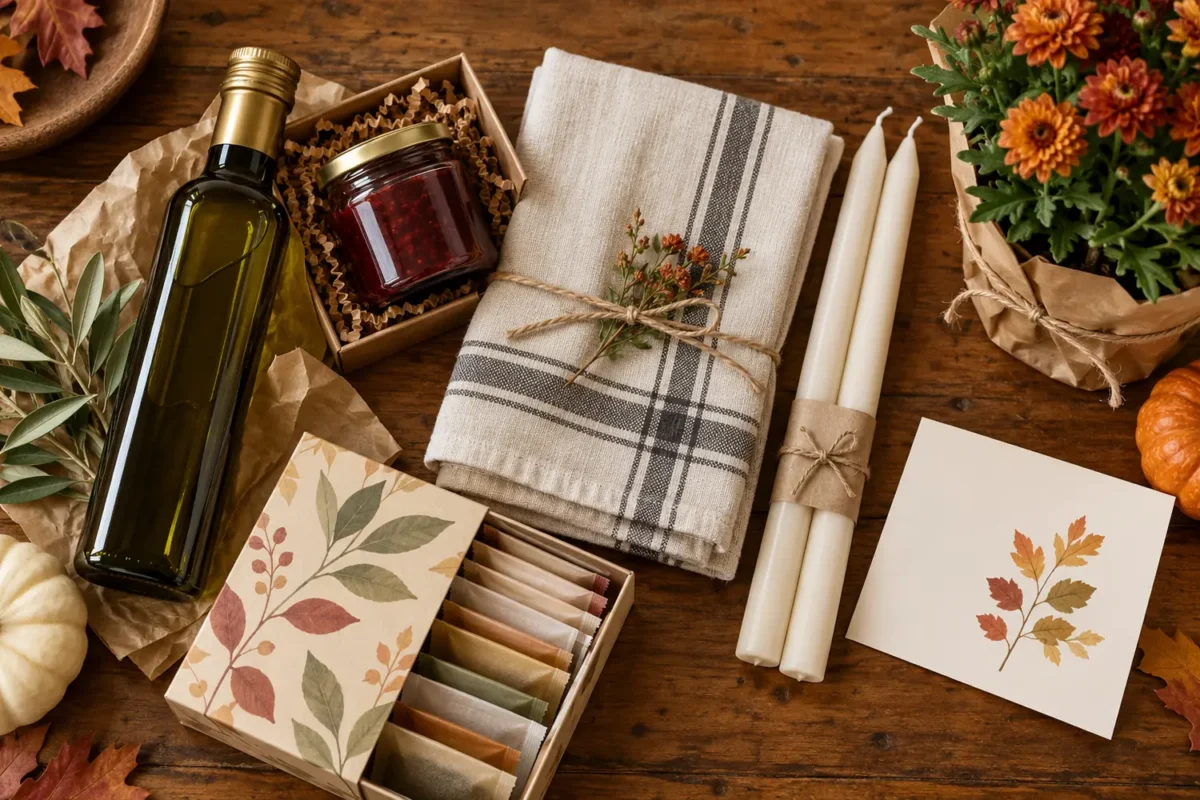
Safe Thanksgiving host gifts including olive oil, preserves, tea, linen towel, candles, and a small plant
Low-assumption gifts are useful, modest, and easy for the host to enjoy after Thanksgiving.
5. Be Careful With Food Gifts
Food seems universally safe, but it can create problems when allergies, religious practices, medical needs, or preferences are unknown. A safe food gift has a sealed label, a reasonable shelf life, and no expectation that it will be served that day.
When possible, avoid common allergens or select packaging that identifies them clearly. Do not bring homemade food to an unfamiliar household unless the host requested it. Homemade items can be heartfelt, but the host may not know the ingredients, preparation conditions, or intended serving plan.
Chocolate, nuts, baked goods, and specialty sauces can work when you have some information. Without it, tea, coffee, olive oil, maple syrup, or a clearly labeled preserve often gives the host more flexibility.
6. Alcohol Is Not the Default Safe Choice
Wine has long been treated as a standard host gift, but it assumes the household drinks alcohol. The host may abstain for health, faith, recovery, pregnancy, medication, personal preference, or no stated reason at all. You do not need to investigate.
If you know that wine is welcome, bring it as a gift for later rather than a bottle the host must open. If you do not know, choose a non-alcoholic option. Premium tea, coffee, sparkling cider, drinking chocolate, or a pantry item can feel equally complete.
7. Set a Budget That Keeps the Gesture Comfortable
For a host you do not know well, about 15 to 30 dollars is a practical range in many situations. It is enough to select a finished, good-quality item but modest enough to avoid social pressure. A smaller amount can be appropriate for a casual invitation, a student gathering, or when you are also bringing requested food. A little more may suit a formal dinner or an overnight stay.
Price should follow context, not anxiety. Spending more does not solve uncertainty. In fact, an expensive gift can make a new relationship less comfortable.
Focus on presentation and completeness. A 12 dollar tea assortment with a brief card often feels more intentional than a costly object selected without knowledge of the recipient.
8. Avoid Gifts That Create Immediate Work
Thanksgiving kitchens run on timing, counter space, refrigerator space, and oven schedules. A gift becomes a burden when it demands a decision in the busiest part of the day.
Avoid arriving with flowers that need a vase and trimming. If flowers are appropriate, bring them already arranged in a small container. Avoid a dessert, side dish, or beverage that must be chilled or served unless it was coordinated in advance. Avoid large gift baskets with layers of packaging that the host has to unpack while greeting people.
The easiest gift handoff takes a few seconds. Tell the host it is for later, place it where directed, and move your attention back to the gathering.
9. Match the Gift to the Type of Invitation
Not every Thanksgiving gathering carries the same expectations.
Casual Friendsgiving
Choose something relaxed and shareable for later, such as coffee, tea, preserves, or a practical towel. If the organizer assigned food, prioritize that contribution and keep any additional host gift very small.
Formal family dinner
A neatly packaged pantry item, neutral textile, or simple candle set is appropriate. Presentation can be a little more polished, but the value can remain moderate.
Coworker or professional contact
Keep the gift especially neutral. Avoid alcohol unless you know it is welcome, and avoid personal care, clothing, humor, or expensive products. A small consumable gift with a short card is sufficient.
First meeting with a partner’s family
The emotional importance may feel high, but the safest approach is still modest. Ask your partner about household preferences and whether another family member traditionally brings a particular item. Do not try to make a dramatic first impression with price.
Overnight invitation
An overnight stay involves more hospitality than one meal. A slightly more substantial gift or a follow-up thank-you may be appropriate. You might bring a pantry gift on arrival and send a brief handwritten note afterward.
10. Consider the Household, Not Just the Host
A Thanksgiving invitation may involve a couple, roommates, an extended family, or several people sharing hosting duties. When you are unsure who did what, address the gift to the household or everyone who hosted rather than singling out one person.
Shared gifts work well in this setting. Tea, coffee, preserves, a neutral kitchen textile, or a small plant can be enjoyed without implying a close individual relationship. If children helped host, a warm mention in the card is often enough. You do not need separate gifts for every person.
Pets matter too. Avoid lilies and other plants that can be dangerous to cats, and avoid food left within easy reach of animals. When uncertain, skip the plant and select a non-fragile pantry item.
11. Present the Gift Without Making It a Performance
Simple wrapping is best. A paper gift bag, kraft box, reusable cloth wrap, or understated ribbon protects the item and signals that it is complete. Avoid oversized packaging, glitter, or anything difficult to dispose of during a busy holiday.
At the door, say something brief:
- Thank you for including me. This is a small gift for you to enjoy later.
- That sentence removes pressure to open or serve the gift. If the host is juggling coats, food, and arrivals, wait until there is a natural moment or ask where you should place it.
- A brief handoff and a simple card let the host receive the gift without interrupting the gathering.

Guest giving a small gift bag and thank you card to a Thanksgiving host
12. Write a Card That Does Not Pretend to Know Them Well
A card can make a neutral gift feel personal without becoming intimate. The message should acknowledge the invitation and hospitality rather than make broad claims about the relationship.
You can write:
- Thank you for welcoming me to your Thanksgiving gathering. I appreciate the invitation and look forward to sharing the day with everyone.
- After the meal, a follow-up message can be even more specific:
- Thank you for such a welcoming Thanksgiving. I especially enjoyed meeting everyone and the care you put into bringing the group together.
- Specific appreciation feels genuine. Avoid exaggerated language about a person you have just met.
13. Gifts to Avoid When You Have Limited Information
Some gifts are not wrong in every setting, but they involve too many assumptions for a new relationship:
• Strongly scented candles, perfume, or body products
• Clothing, jewelry, or accessories
• Political, religious, or joke gifts
• Large decorative objects or holiday signs
• Alcohol when you do not know whether it is welcome
• Homemade food with unclear ingredients
• Flowers that require immediate arranging
• Fresh food that needs refrigerator or oven space
• Expensive technology or luxury items
• Gifts that imply the host needs to improve the home, cooking, or appearance
A gift should not ask the host to demonstrate enthusiasm. If its humor, meaning, or usefulness requires an explanation, save it for someone you know better.
14. A Quick Decision Guide
Use this sequence when you need to choose quickly:
1. Check whether the host requested a contribution.
2. Ask one reliable person about alcohol, allergies, pets, and formality.
3. Choose a consumable or practical item that can be enjoyed later.
4. Keep the value moderate and the packaging compact.
5. Add a short card focused on thanks.
6. Tell the host there is no need to open or serve it.
If you still feel uncertain, select a clearly labeled tea assortment, good olive oil, maple syrup, or a neutral kitchen towel. These choices are not designed to be unforgettable. They are designed to be gracious, flexible, and easy to receive.
Read more: How to Choose a Meaningful Gift for Anyone
15. Frequently Asked Questions
Do I have to bring a gift to Thanksgiving dinner
Usually no. A host gift is a voluntary expression of thanks, not a requirement. If the host asked you to bring a dish, that contribution may be enough. A small additional gift is optional.
What is the safest Thanksgiving gift for a host I barely know
A modest, shelf-stable consumable with clear labeling is often safest. Tea, coffee, olive oil, maple syrup, or preserves can be enjoyed later and do not require immediate serving.
Is 20 dollars enough for a Thanksgiving host gift
Yes. A thoughtful item in the 15 to 30 dollar range is appropriate for many Thanksgiving invitations. The relationship and setting matter more than the exact price.
Should the host open the gift in front of me
No. Present it as something for later. Thanksgiving hosts are often busy, and removing the expectation of an immediate reaction is considerate.
Can I bring flowers
Yes, but bring a small arrangement already placed in a container. Loose flowers can create work because the host must find a vase, trim stems, and clear space.
Is a gift card appropriate
A general gift card can feel impersonal when the relationship is new, and a specific store assumes preferences. It is not offensive, but a modest consumable or practical household item often feels more natural.
What if I discover another guest brought the same gift
Do not worry. Useful consumables and neutral household items are easy to keep, share, or use later. The purpose is to express thanks, not to win originality.
16. Final Thought
Choosing a Thanksgiving gift for a host you do not know well is an exercise in respectful restraint. You do not need private knowledge or a clever idea. You need a gift that fits the occasion, requires little effort to receive, and leaves the host free to focus on the gathering.
Keep it modest, flexible, and clearly offered with no expectation. The most meaningful part is not the object. It is the message that the invitation and the work behind it did not go unnoticed.